Tracking Icy Edges
January 25-31, 2026

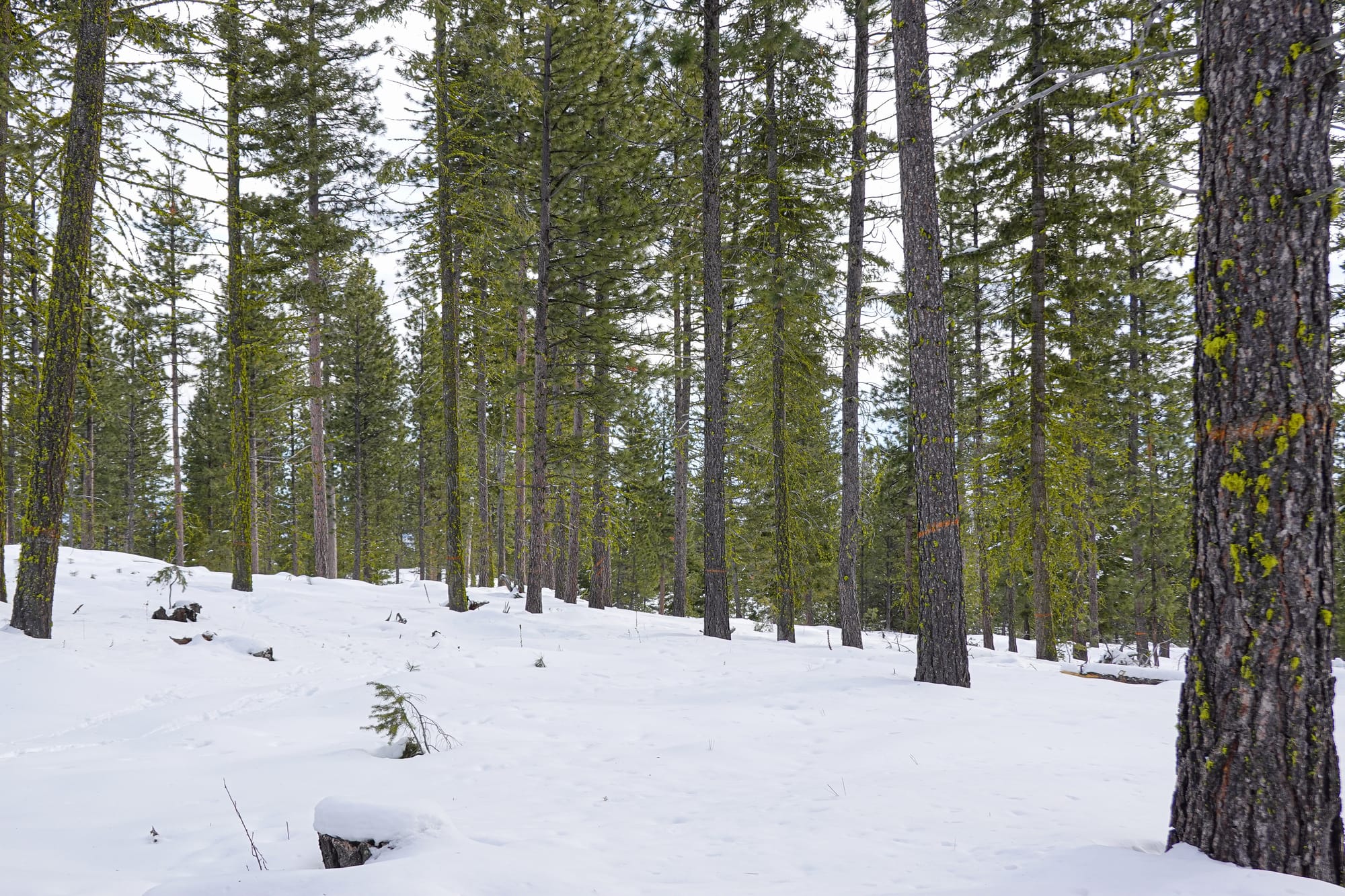
Even if we still get a freak snowstorm, it's starting to feel like winter will slip away with no significant snow accumulation.
Week in Review
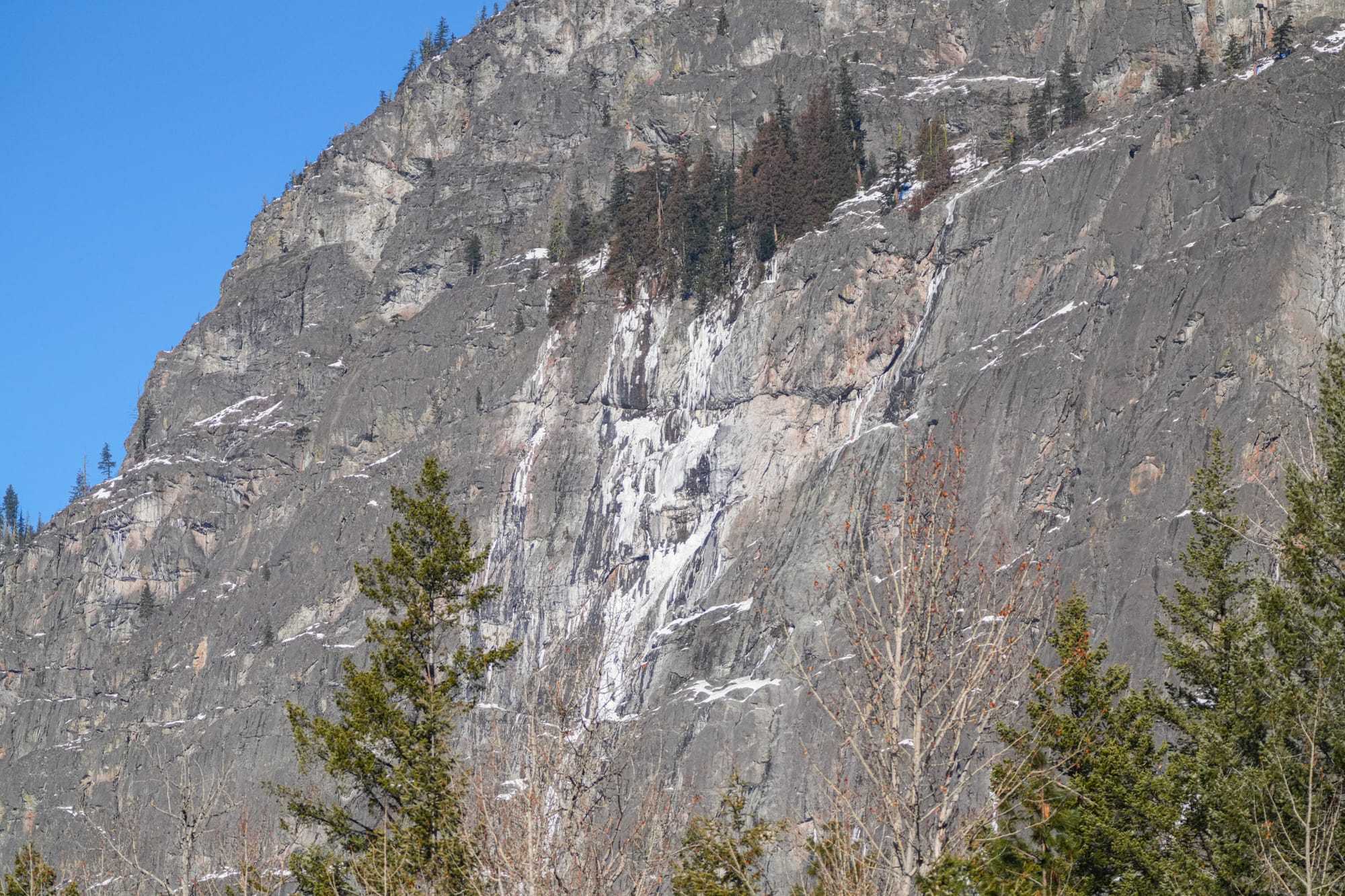
It's been another unsettling week without rain or snow, and last week's chilly temperatures are now rising above freezing while the meager snowpack turns slushy. If anything, this strange winter might be a peek at what the future holds for us, because there's a massive El Niño event brewing in the Pacific Ocean, which is forecast to deliver even warmer and drier conditions next winter. This pattern of deep snowpack in the alpine zone and scant snow in the valleys is occurring widely across the Pacific Northwest (see example from Canada here), and it doesn't bode well.
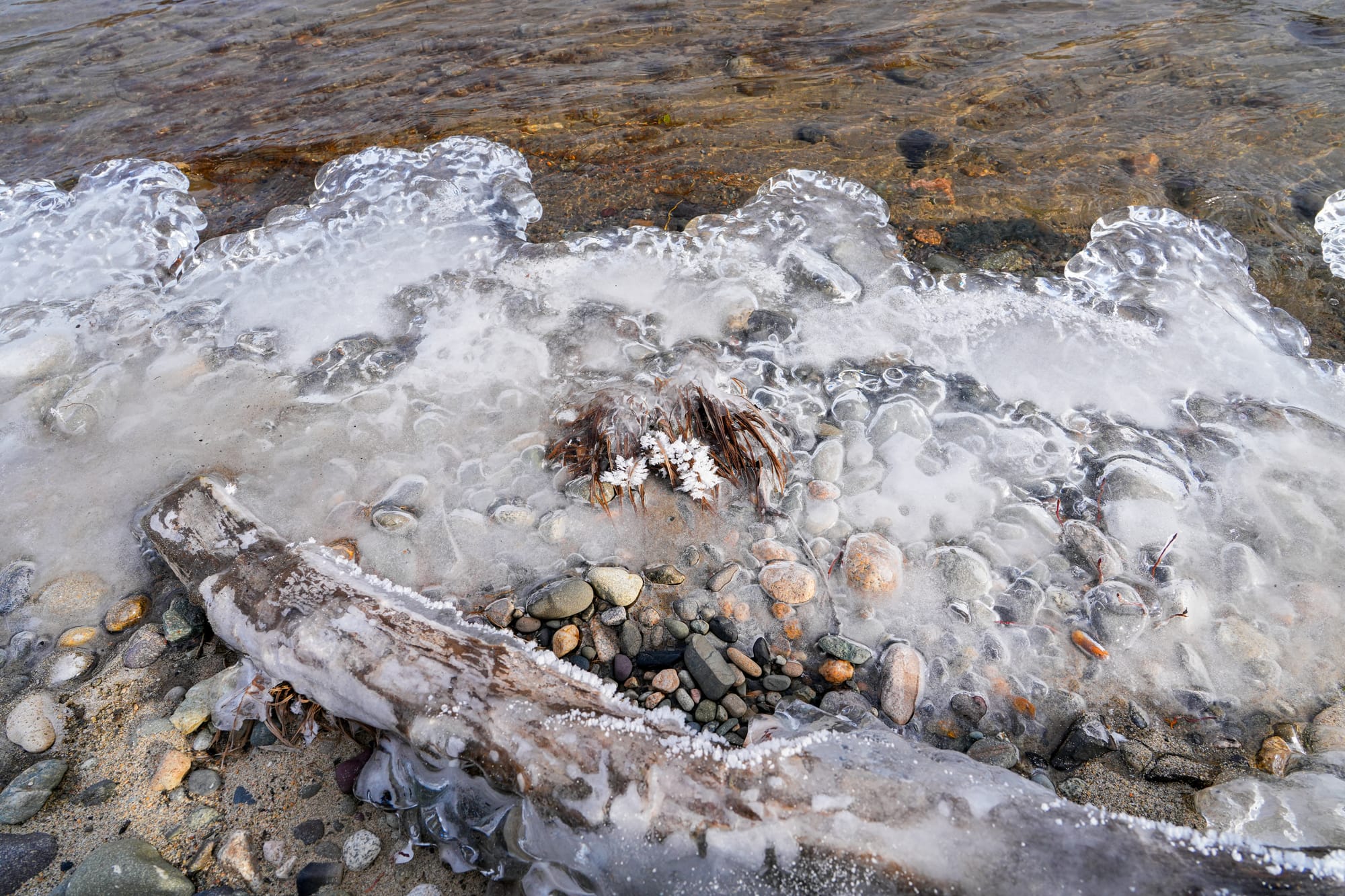
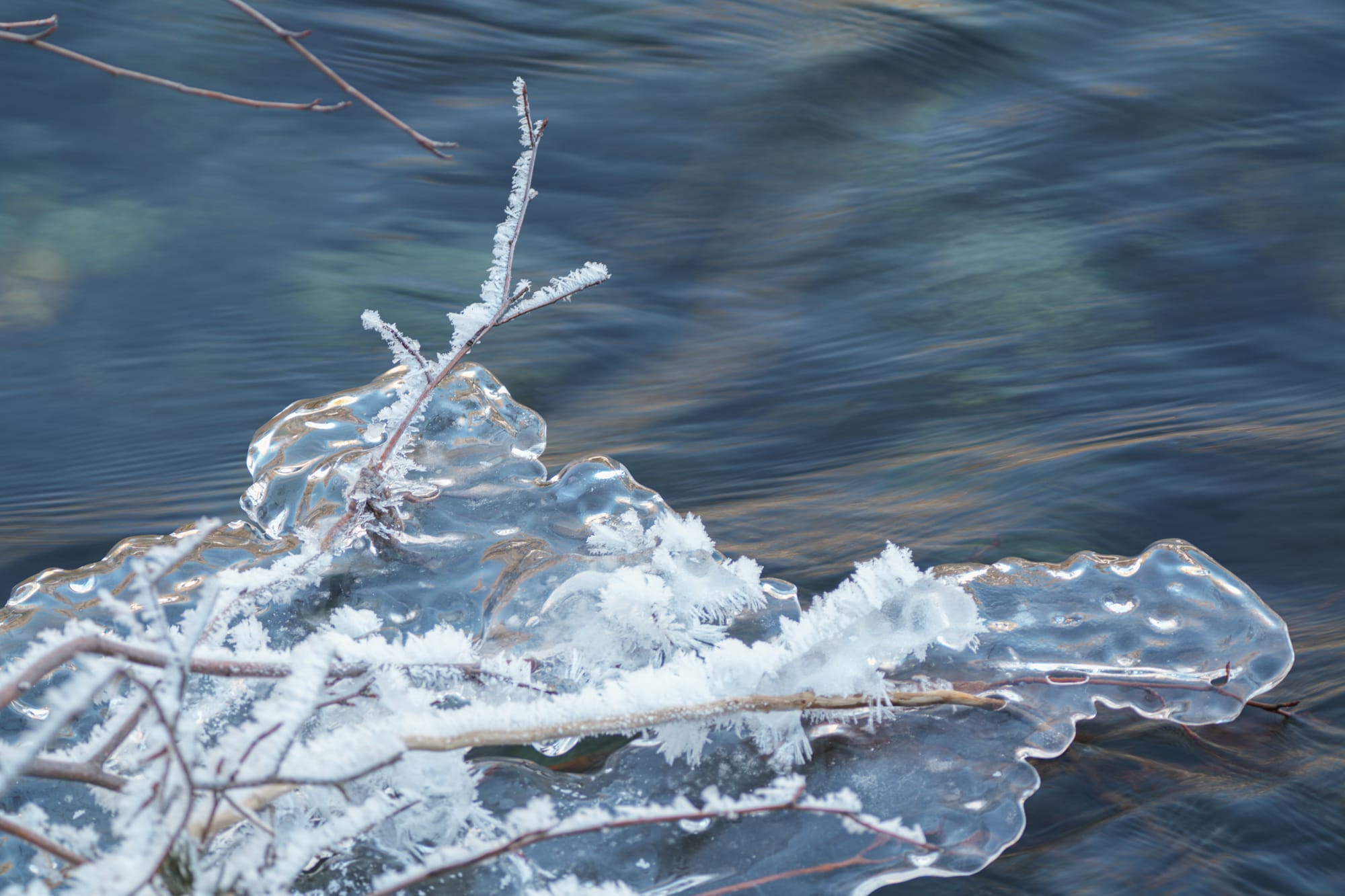
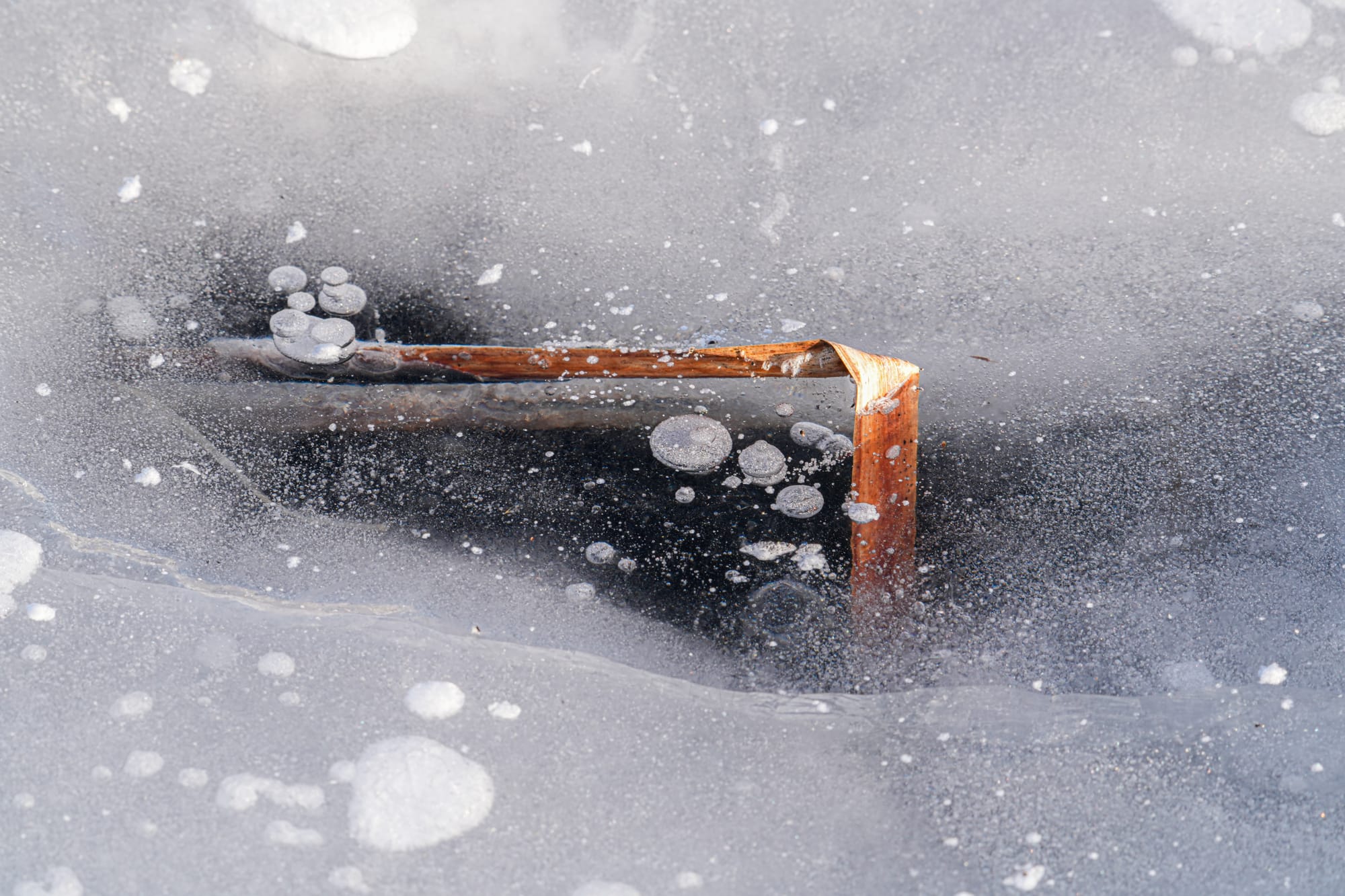
That said, this has been a great week for finding beautiful ice patterns along the river, even if those edges are melting and retreating in the face of rising temperatures. What's so delightful about these ice patterns is that they are so different every year, and every place you walk.
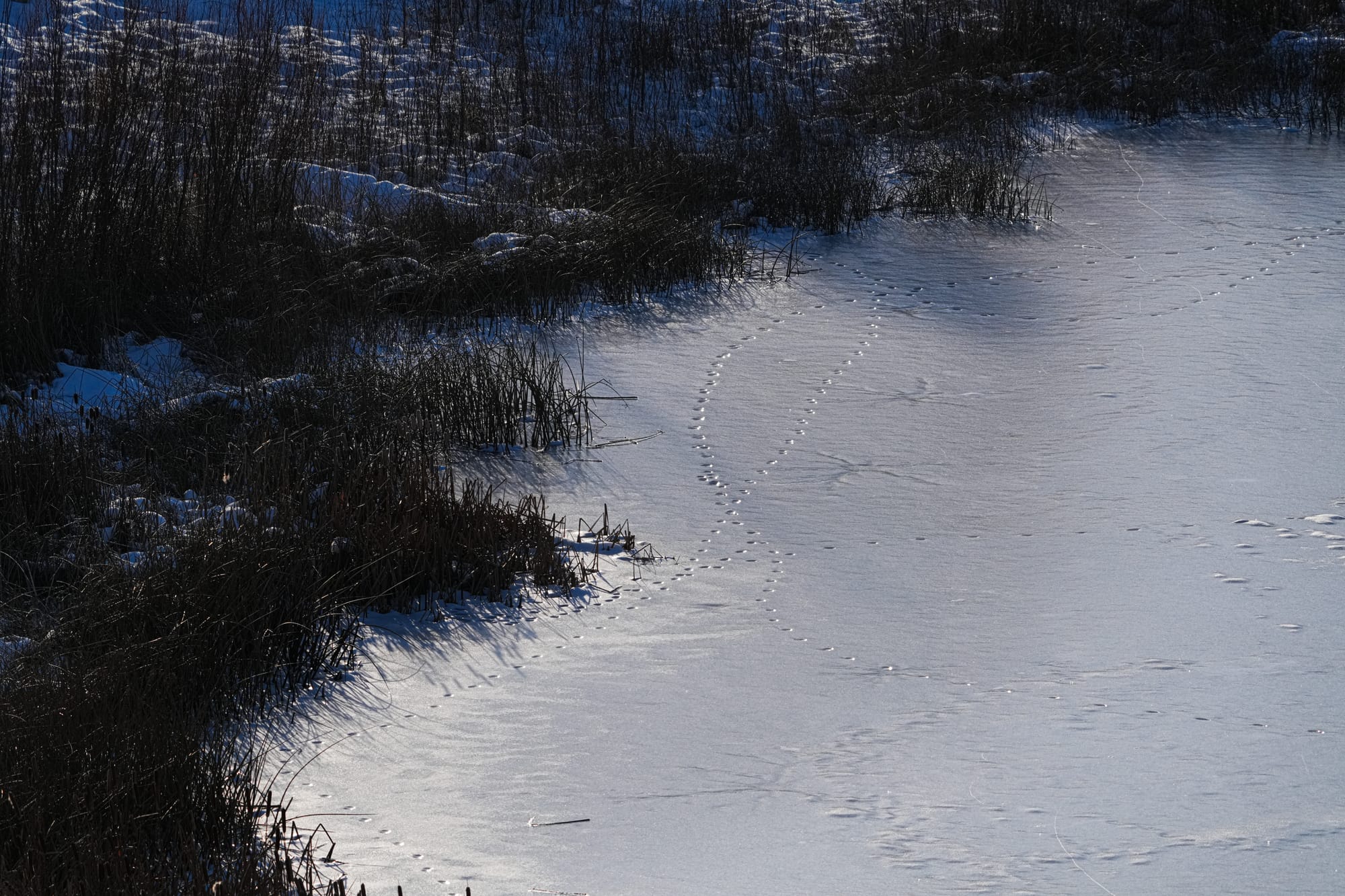
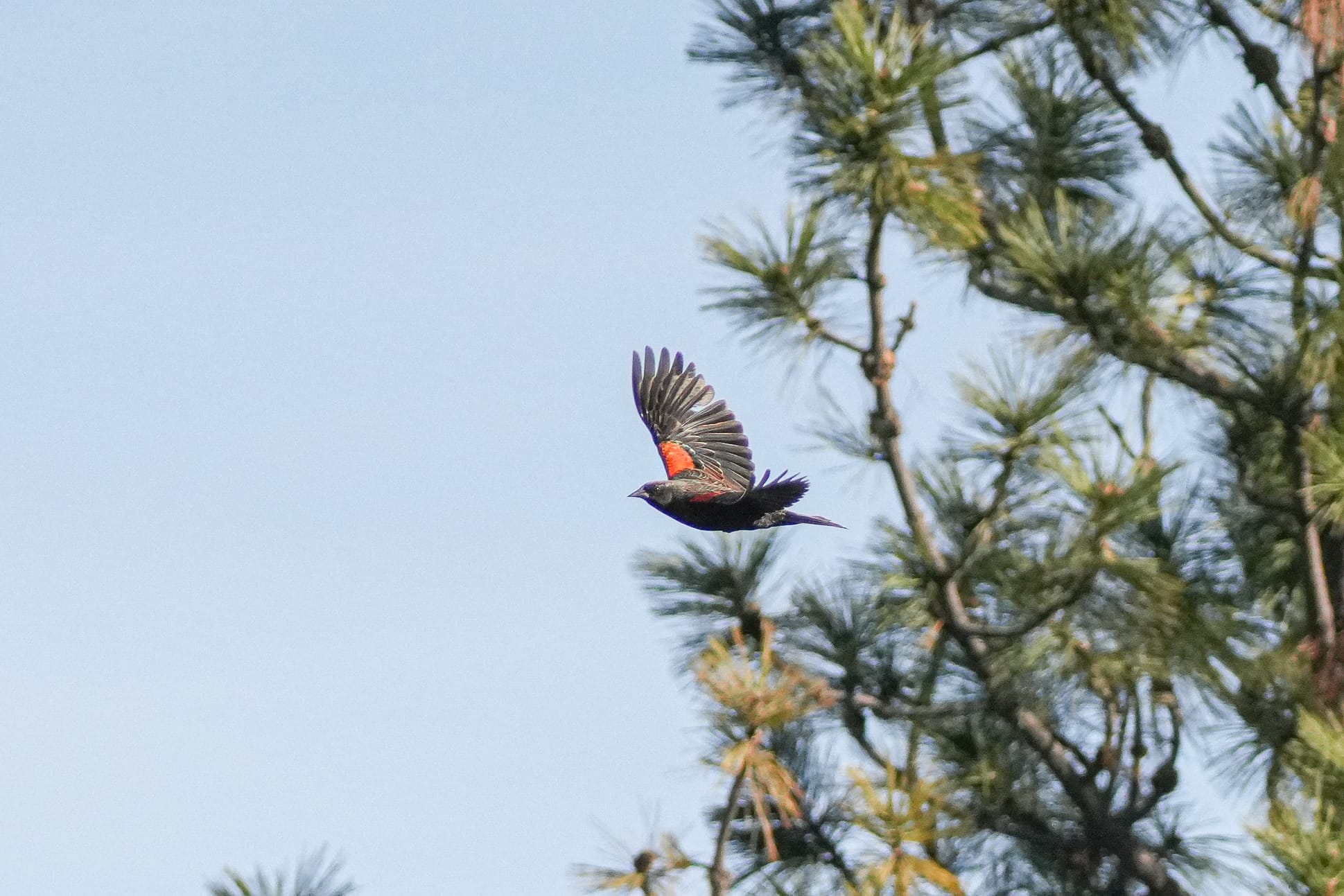
While spring is still several months away, the scant snow and progressive melting make it feel like spring could be just around the corner. In fact, it's still early, but I heard black-capped chickadees and red-winged blackbirds singing this week. Although these birds might spontaneously sing any month of the year, there's a tentative urgency when they start singing in late January.
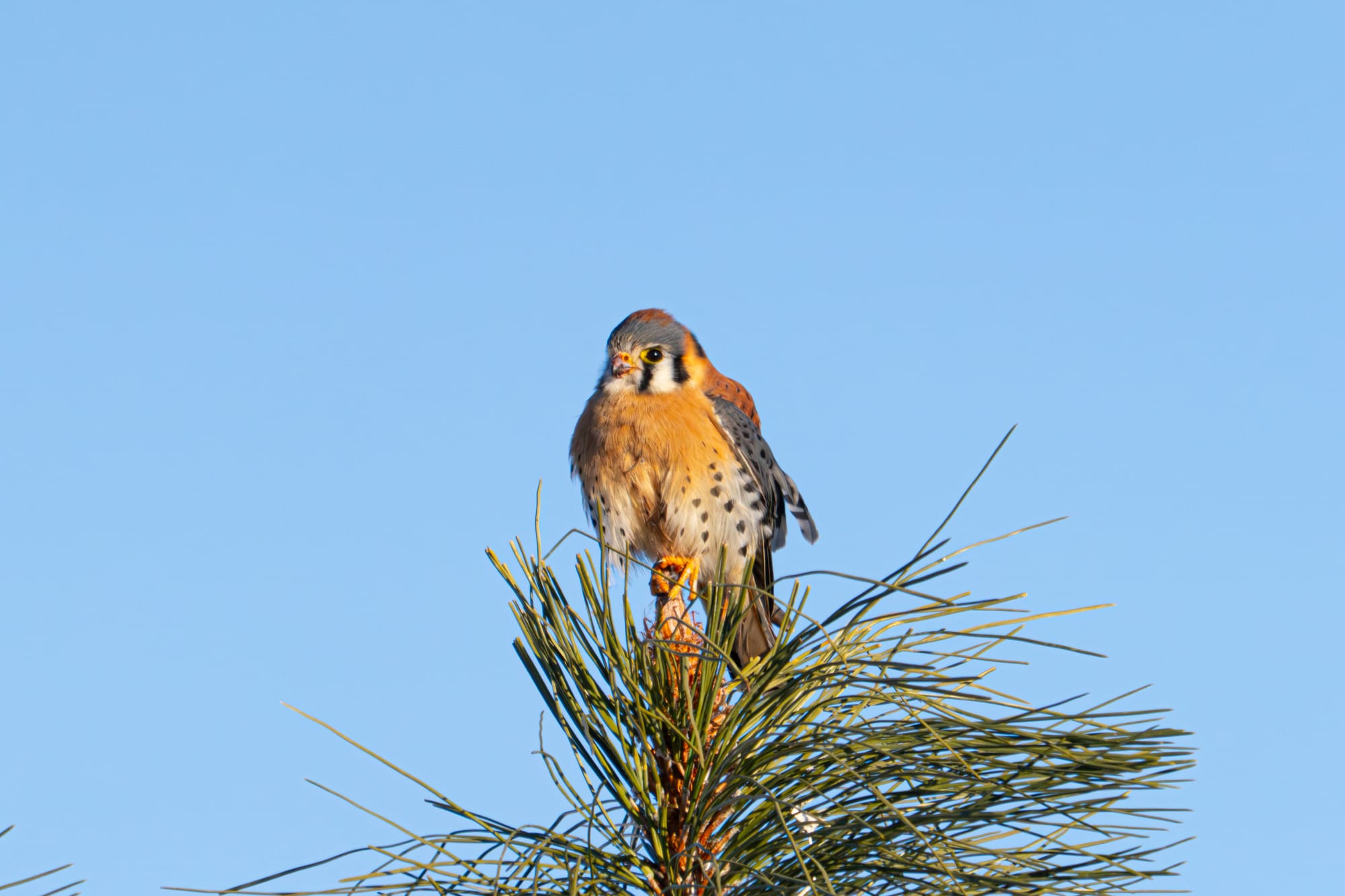
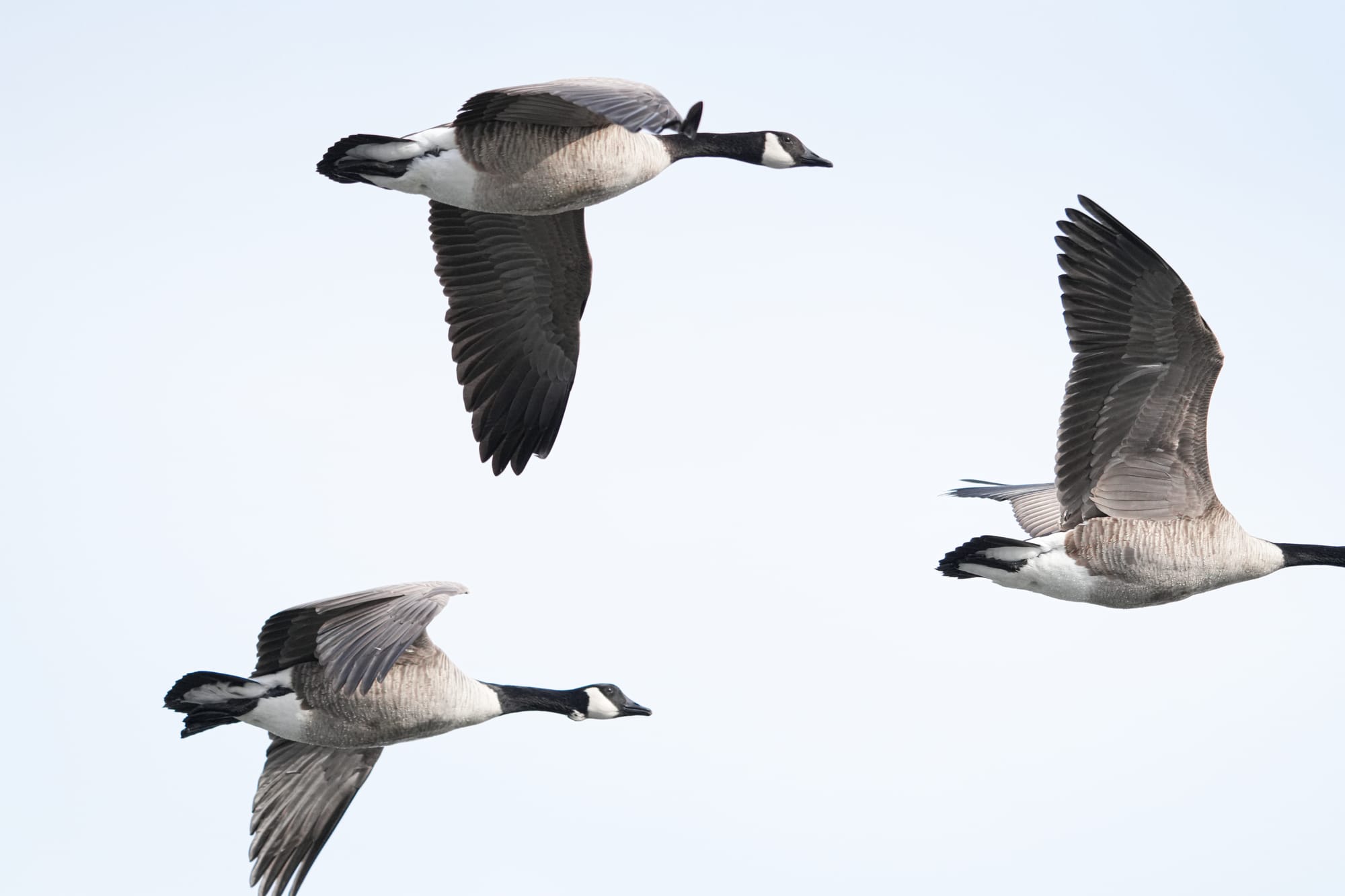
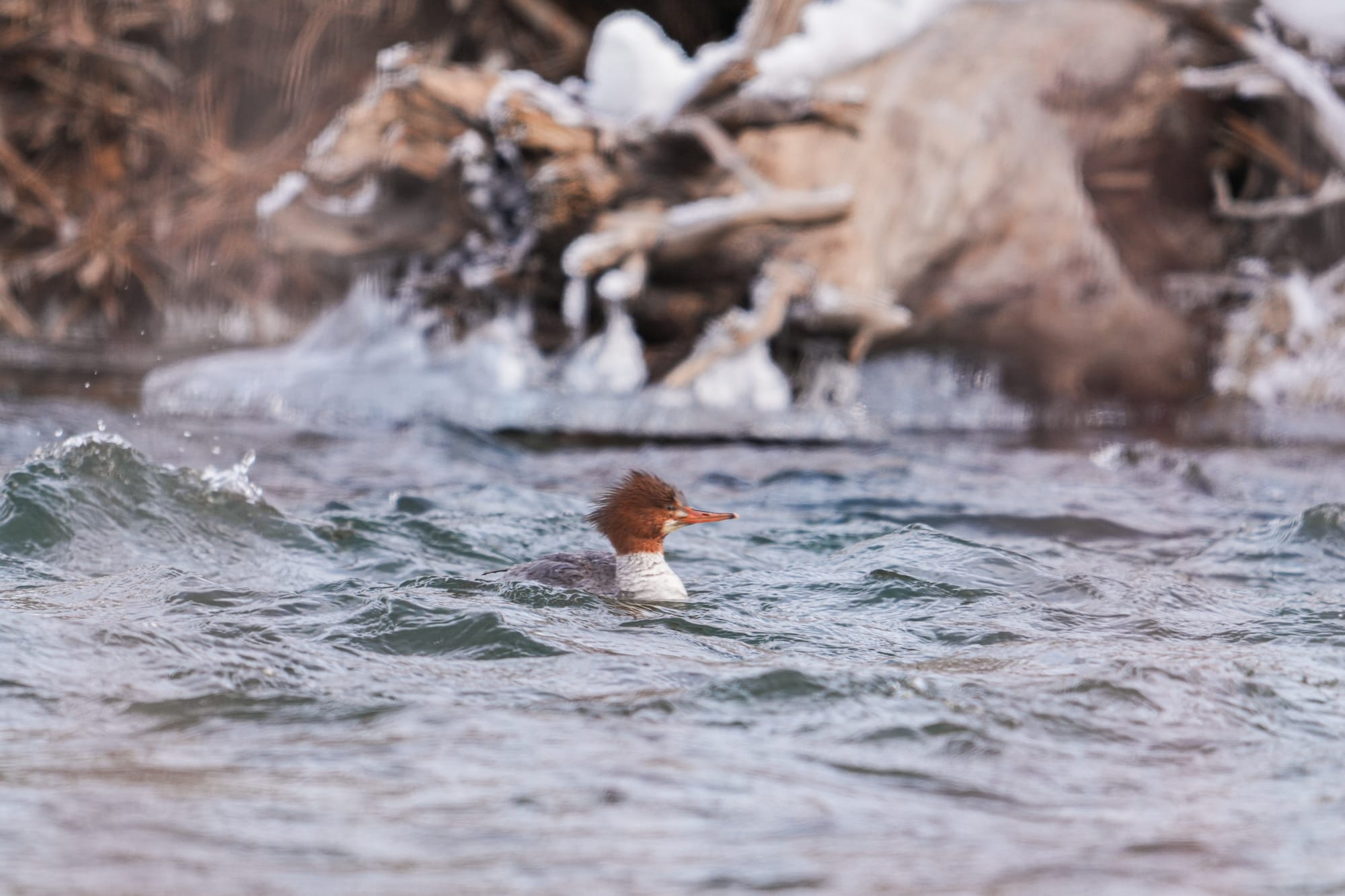
Open waters along the river also attract many birds, making these some of the best places to look for birds on a winter day. This winter has been mild enough that a fair number of Canada geese have stuck around, plus there's a mix of our usual suspects like common mergansers, goldeneyes, ring-necked ducks, and scaup.
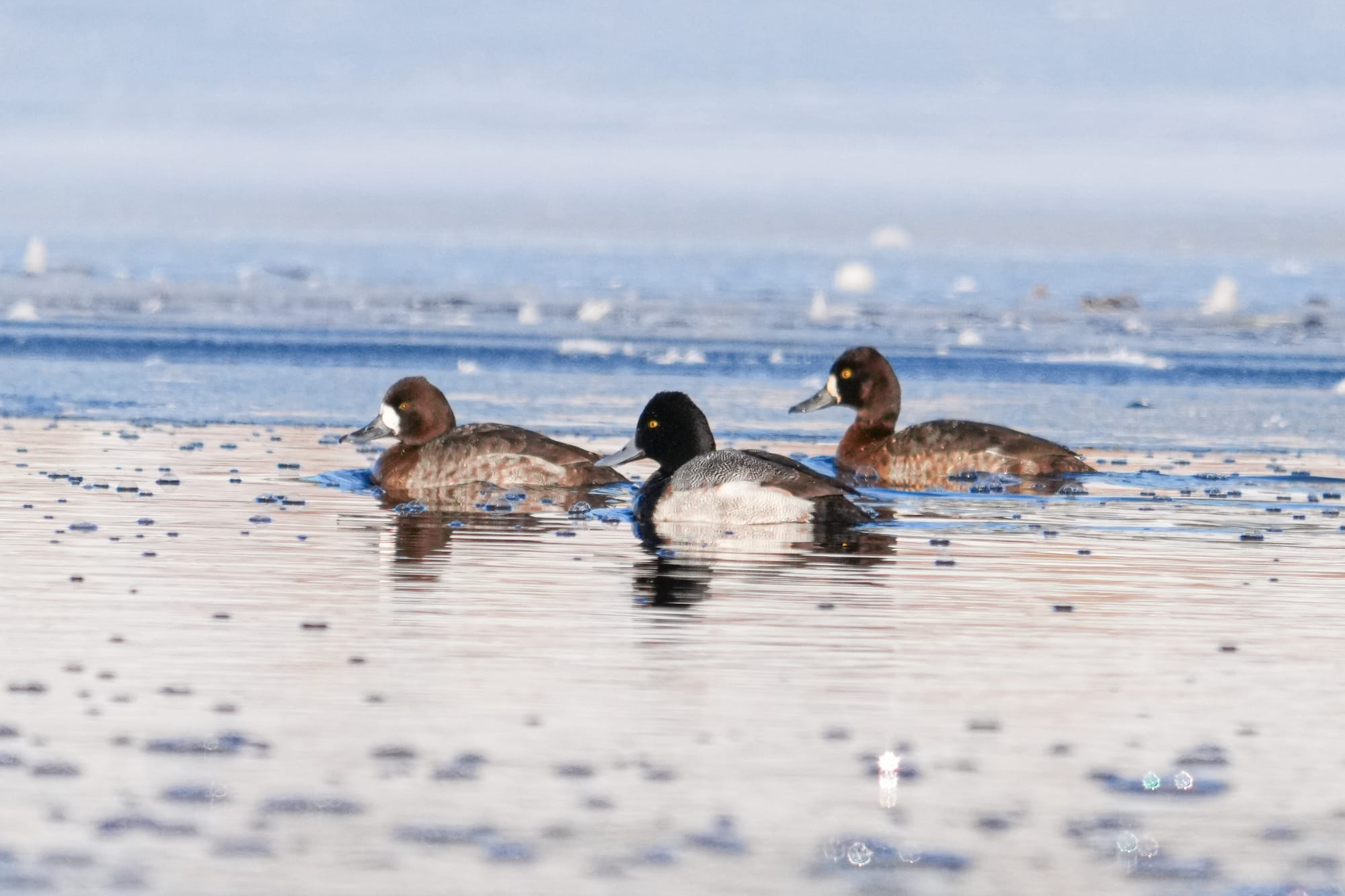
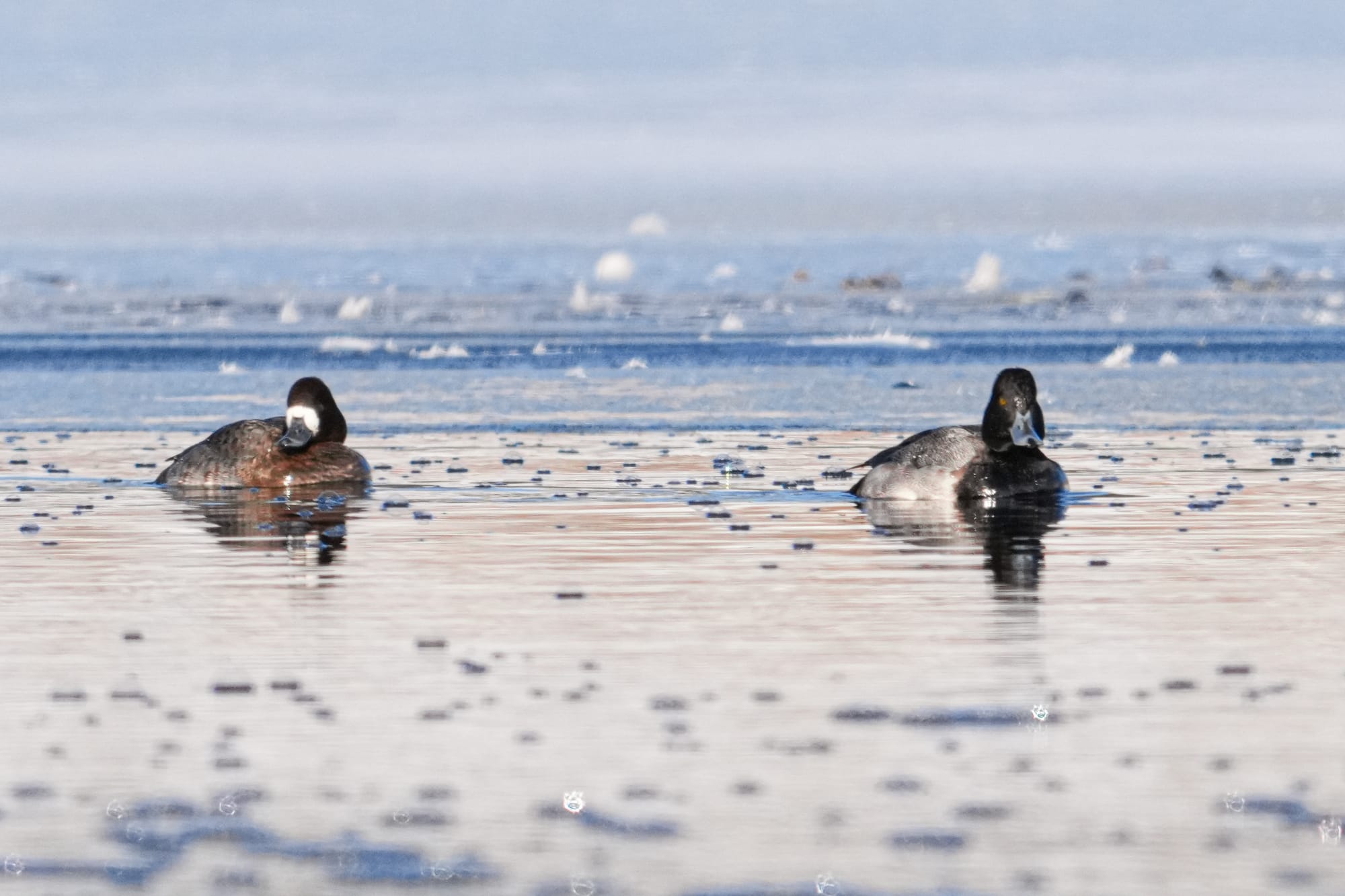
Greater and lesser scaup are challenging to identify. Key marks on these lesser scaup include the slight peak on their heads, and the very narrow (lesser) black nail on the tip of the male's bill. Photo by David Lukas
Observation of the Week: Thermal Cover
In the long-running debate about thinning forests to prevent wildfires, one critical aspect is being overlooked: Stands of dense trees provide a vital and irreplaceable service called "thermal cover" (also known as thermal refuges).
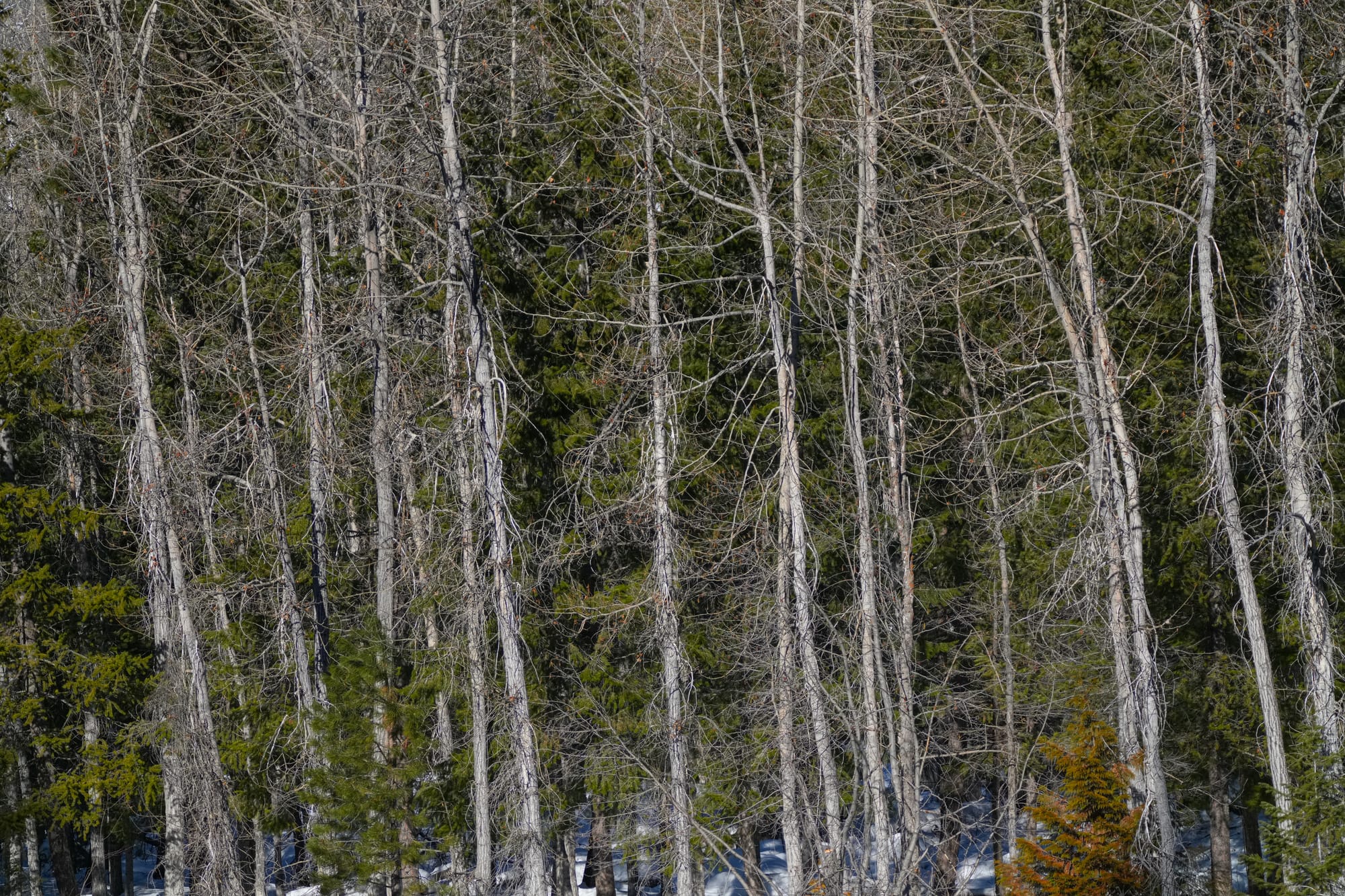
Think about thermal cover this way: If you're an animal, every day you face a life-or-death struggle finding enough food to stay alive. This makes it critical that you conserve every calorie possible by maintaining an ideal body temperature rather than wasting energy trying to warm up in the winter or cool down in the summer.
"Thermal refuges – thermally buffered locations where organisms avoid exposure to unfavorable temperatures – are emerging as one of the largest hopes for the persistence of populations during climate warming." Gibson et al.
Stands of dense trees provide this service for a huge range of animals. Dense trees provide warmth in the winter and cooling shade in the summer. Without access to thermal cover, far more animals become stressed and may either die or have much lower reproductive success.
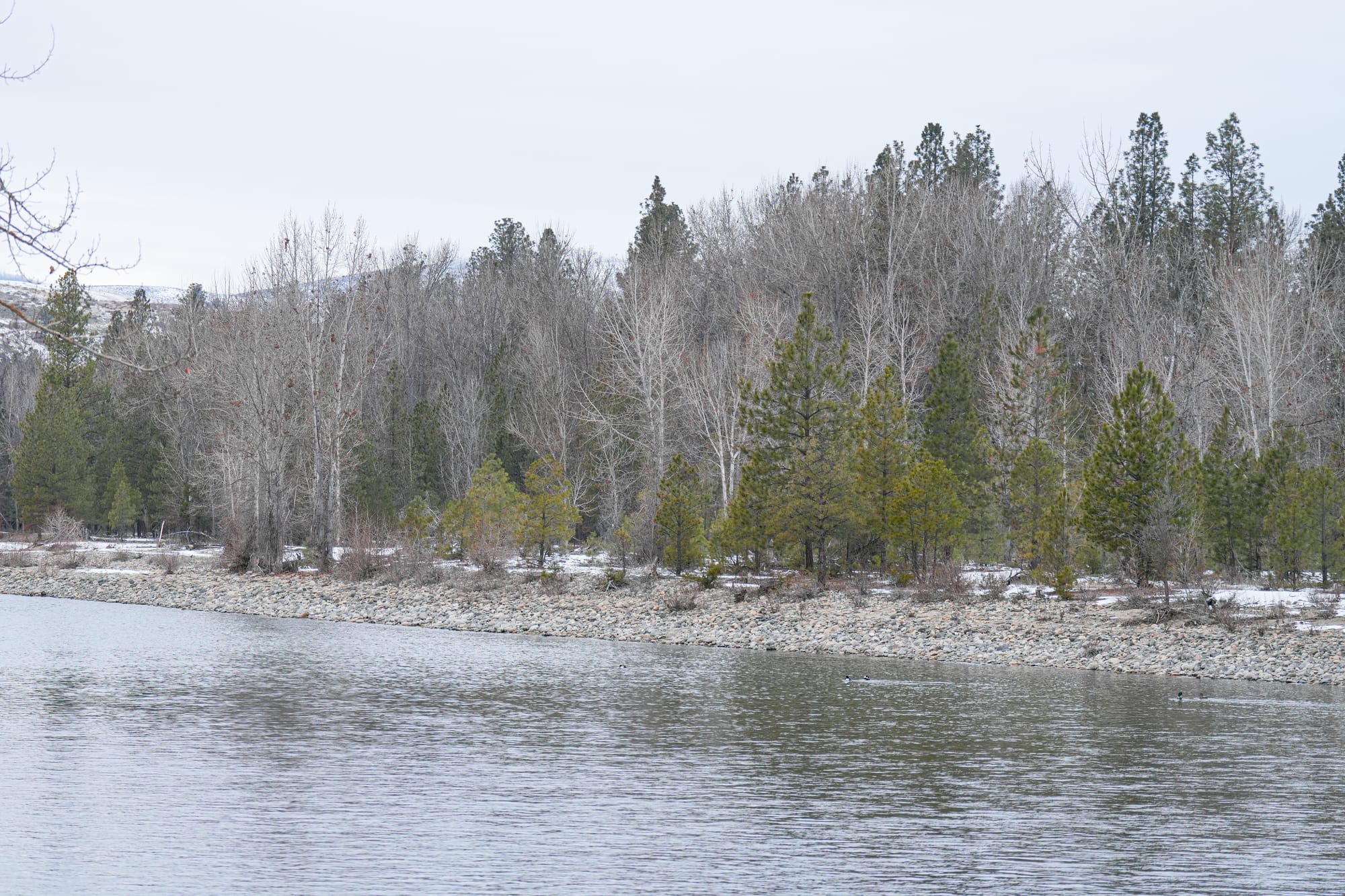
Conifer stands are particularly efficient at providing thermal cover because their dense needles remain on the tree year-round and act like sponges that collect and release heat throughout a stand of trees. But dense stands of conifer trees do far more than provide thermal cover; they also provide much-needed places to build nests, have babies, hide from predators, and many other services.
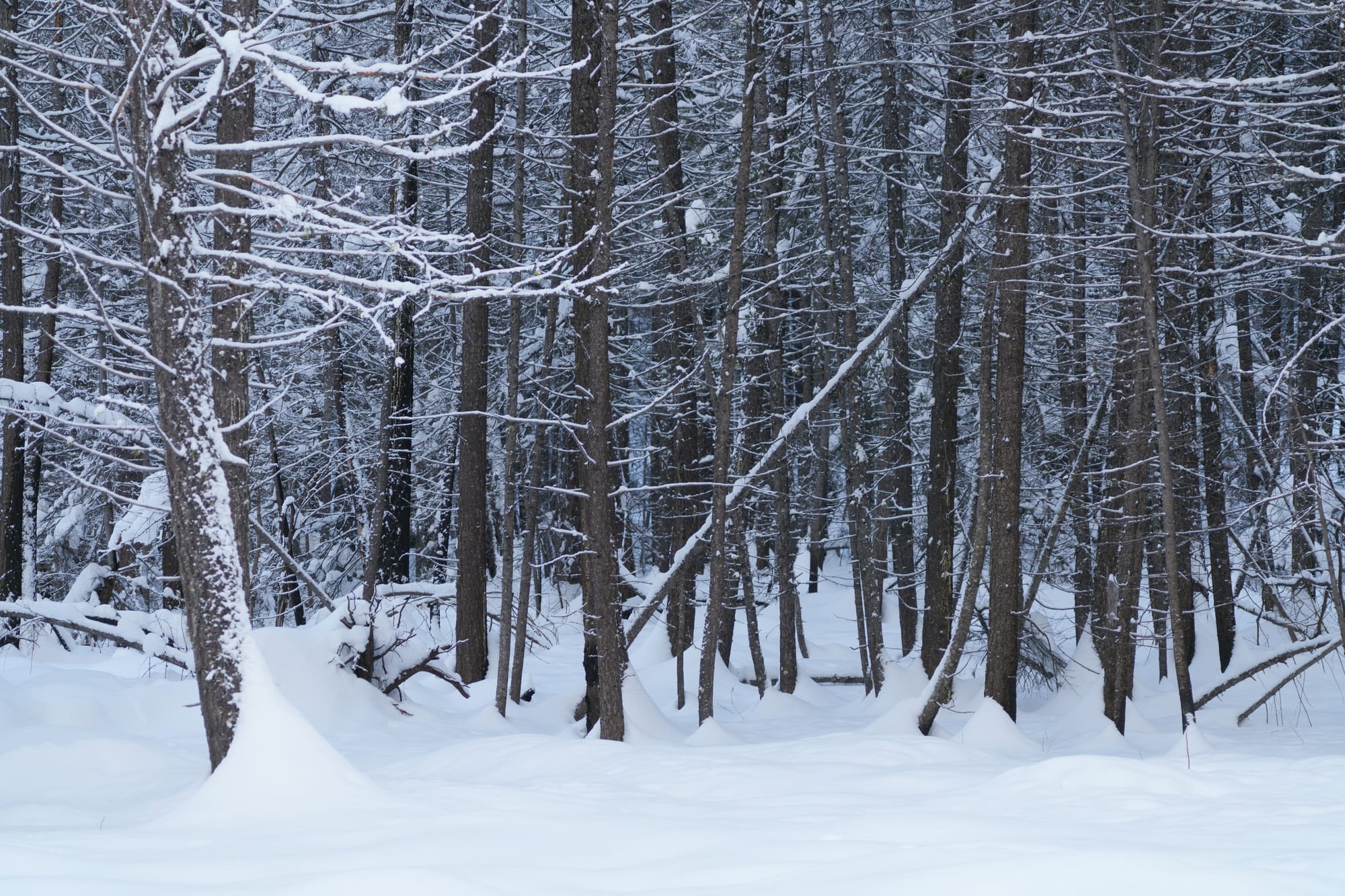
On the other hand, thinned forests provide almost no thermal cover, no hiding places from predators, and no places to nest or protect babies. It's worth keeping this in mind the next time someone tries to convince you that we need to thin our forests.