Leaf It Behind
October 18-24, 2026

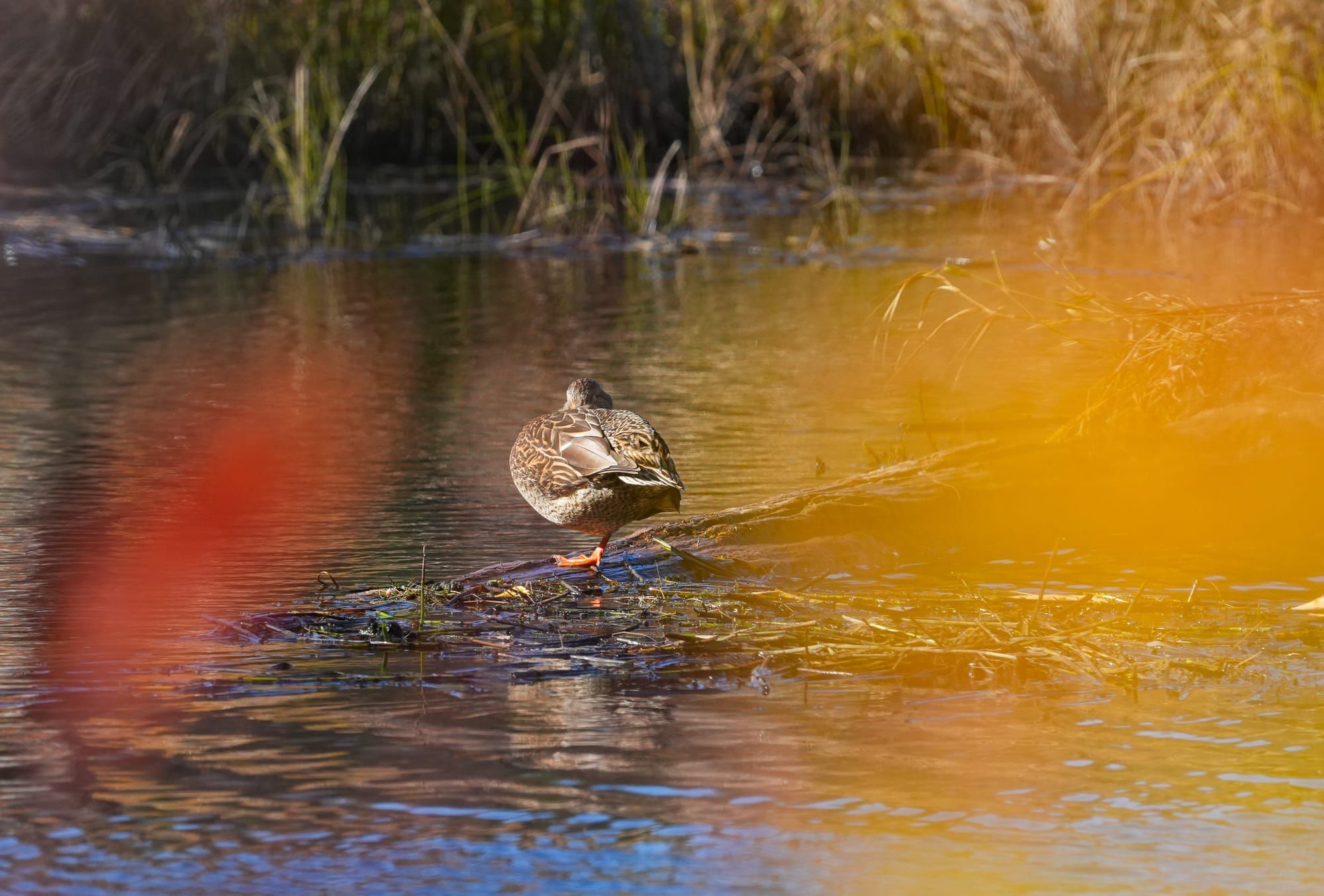
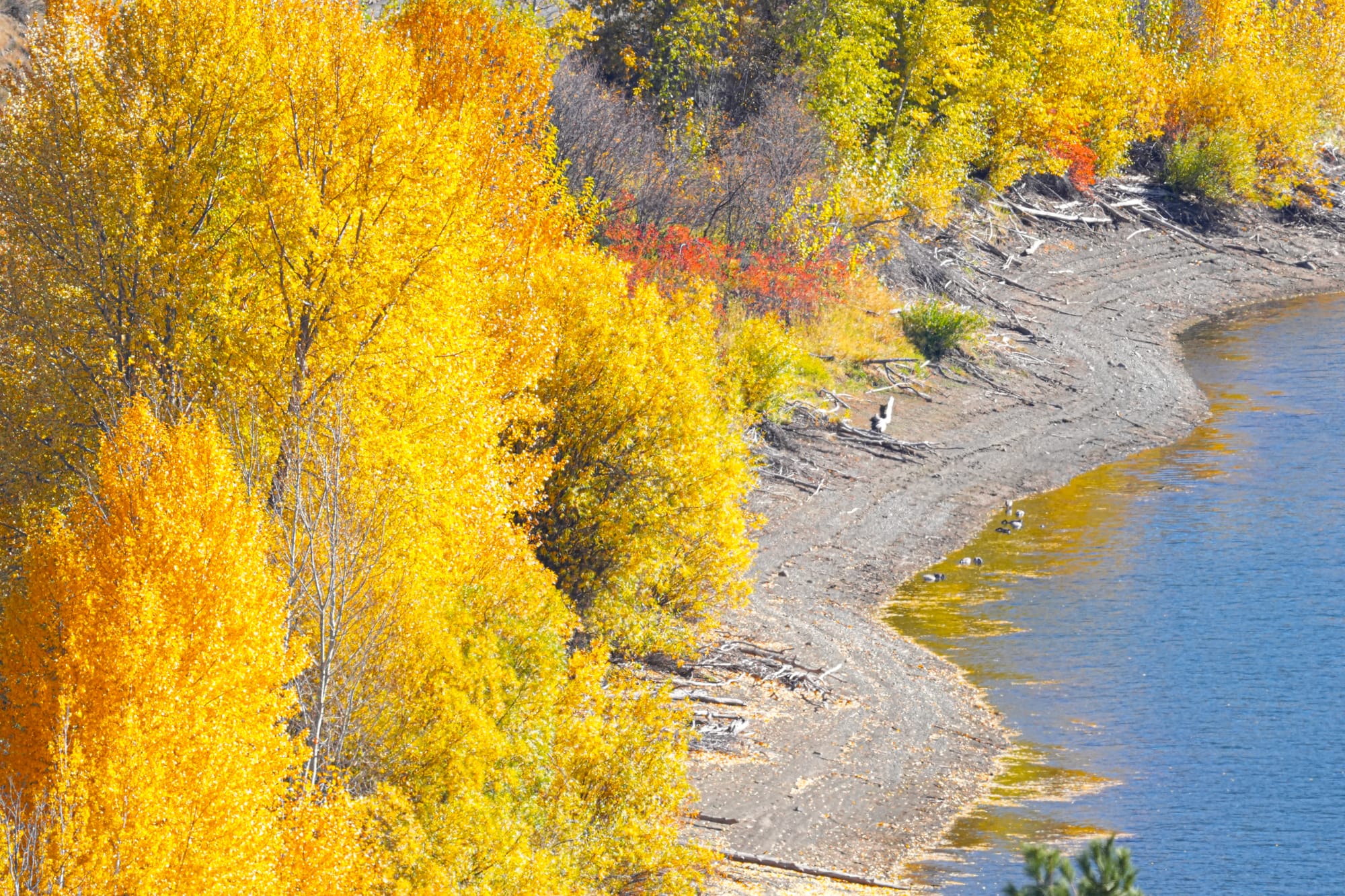
Fall colors in the valley are at their peak amid a stretch of chilly, sunny days.
Week in Review
I may have misspoke last week when I pointed out that the fall colors were noticeably subdued this year, because the colors were radiant this week. Maybe the sun was simply shining through the leaves at just the right moment, or maybe the colors reached their peak this week, but there were moments when the colors were so perfect that they felt like a dream.
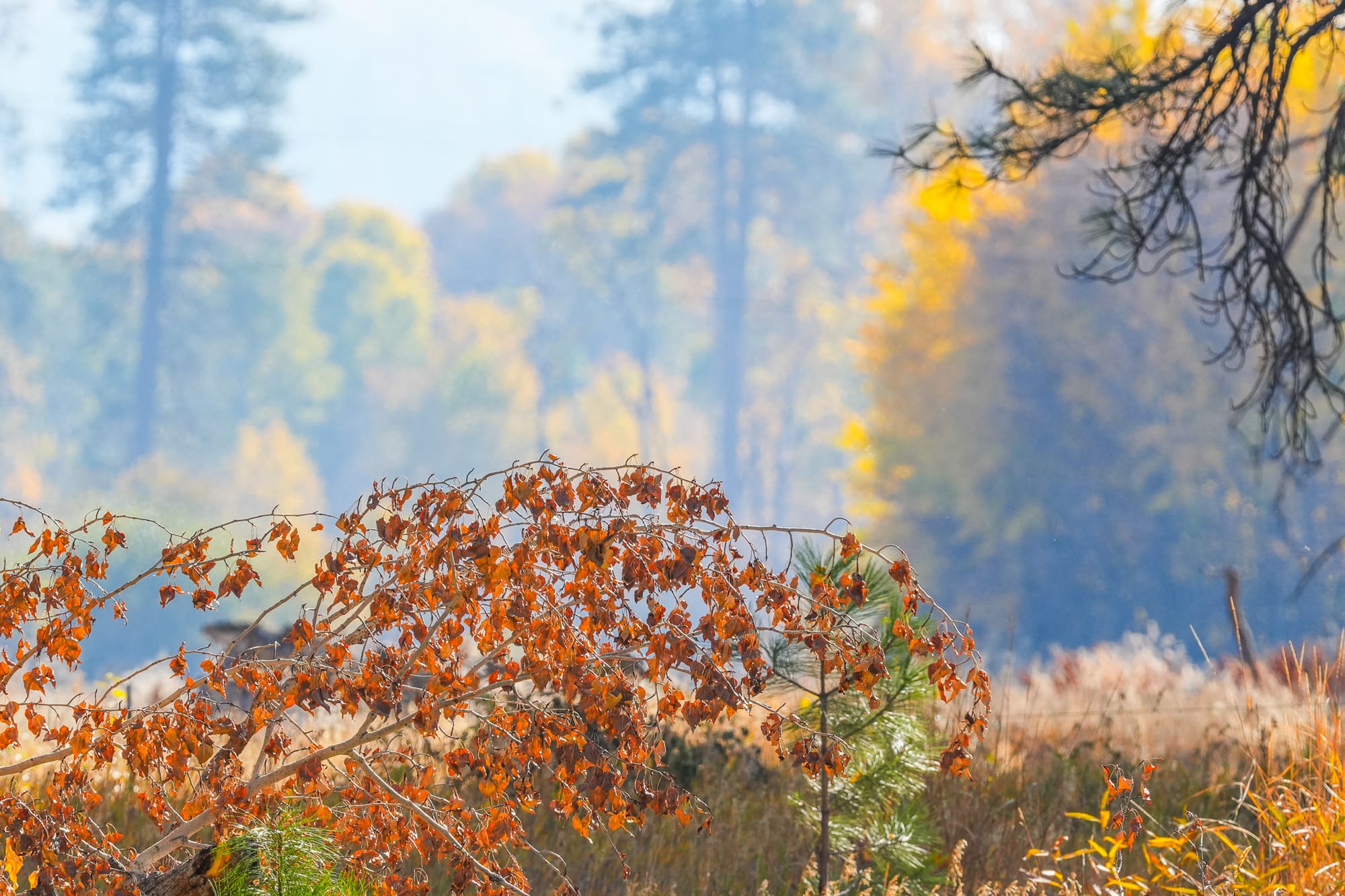
As I briefly mentioned last week, fall colors are partly determined by daytime and nighttime temperatures, and it's possible that temperatures shifted in favor of the colors this week. When days are sunny, leaves continue to photosynthesize and produce abundant sugars, but if nighttime temperatures start dropping, the leaves can't move sugars out of the leaves, and sugars begin to accumulate. These sugars are then converted into colors, so when there are more sunny days and cold nights, the colors begin getting brighter.
While walking amid fall colors this week, I've been surprised to see that there are still a few darners, meadowhawks, and butterflies flying around. I guess that a handful of these hardy insects remain active until the first hard frosts arrive, and they add a nice touch on warm, late autumn days like these.
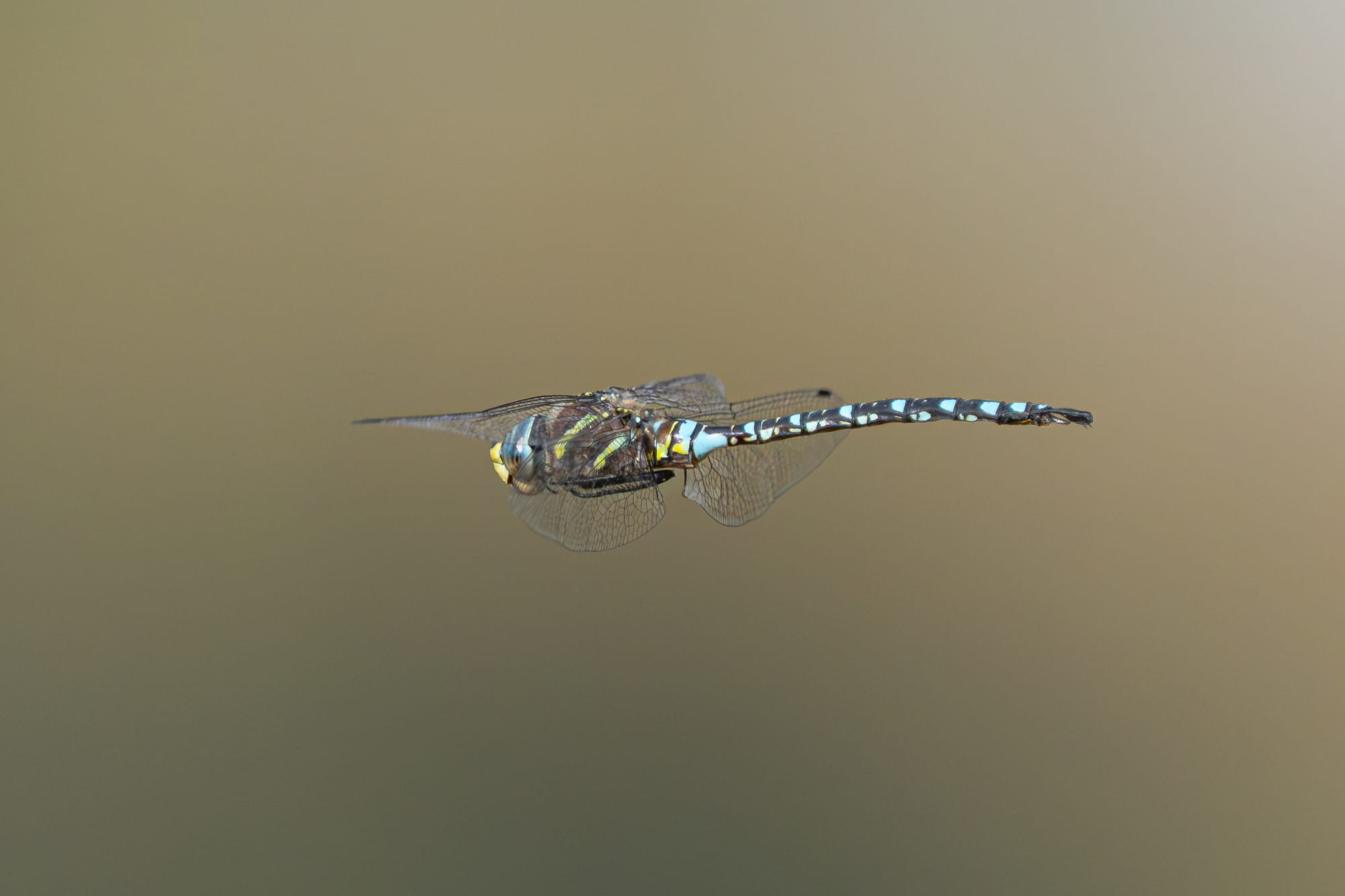
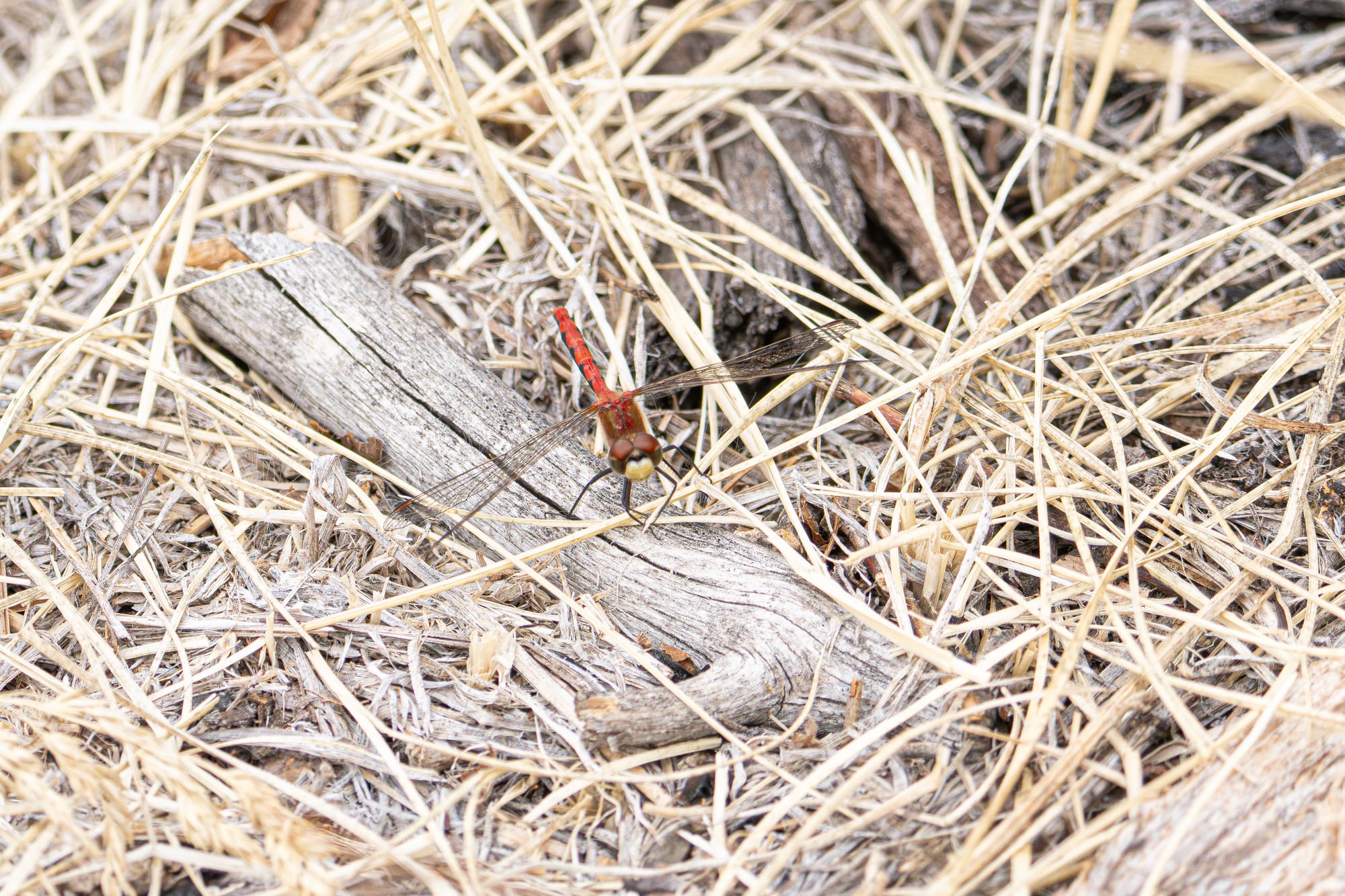
I didn't have a chance to identify the dragonflies I saw this week, but I assume they were the same paddle-tailed darners and white-faced meadowhawks that were everywhere a month ago. Photo by David Lukas
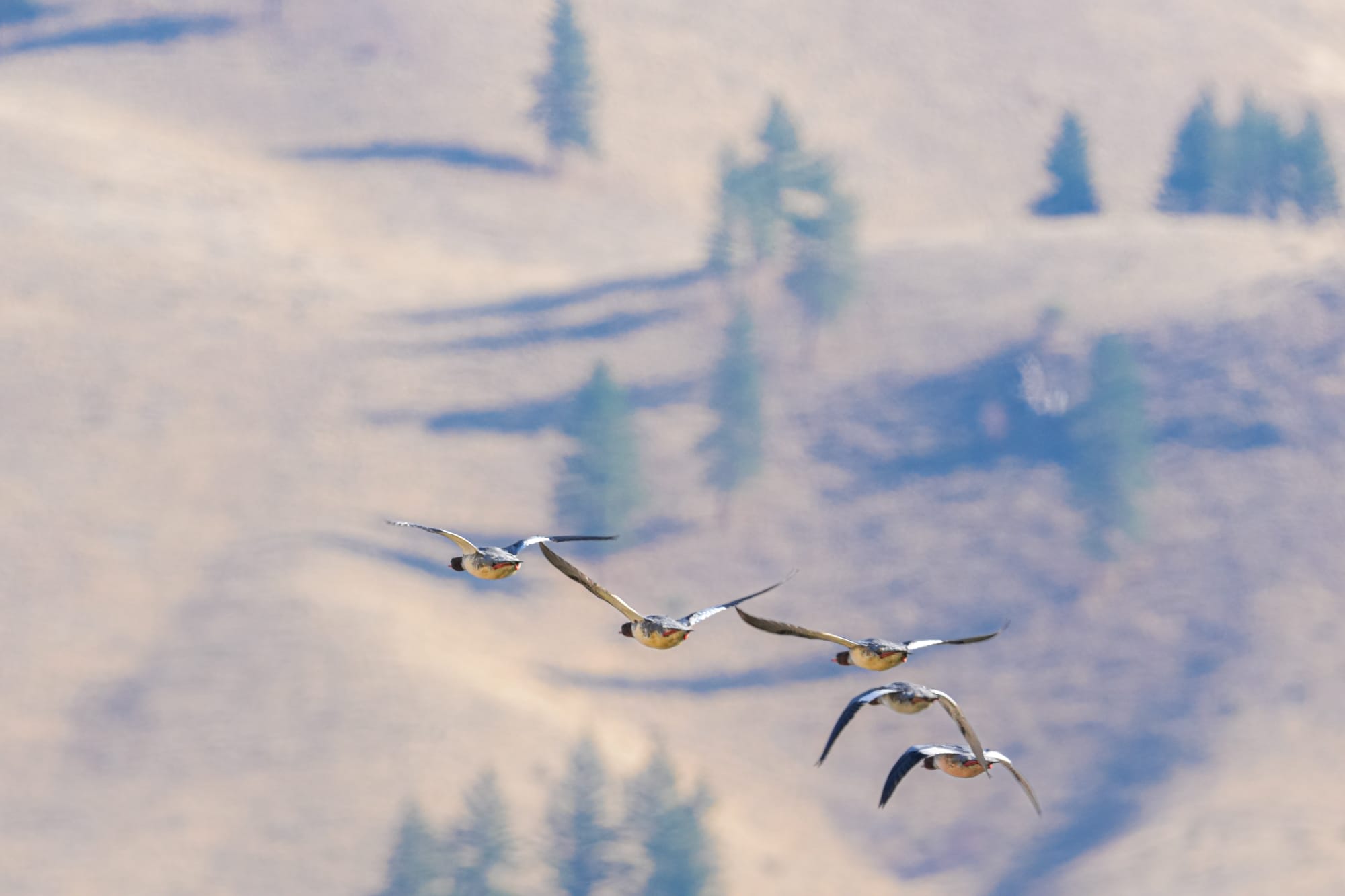
Bird activity was fairly subdued this week, but I did notice that the big groups of white-crowned sparrows that had been gathering to feast on weed seeds over the past month have now been replaced with big groups of dark-eyed juncos.
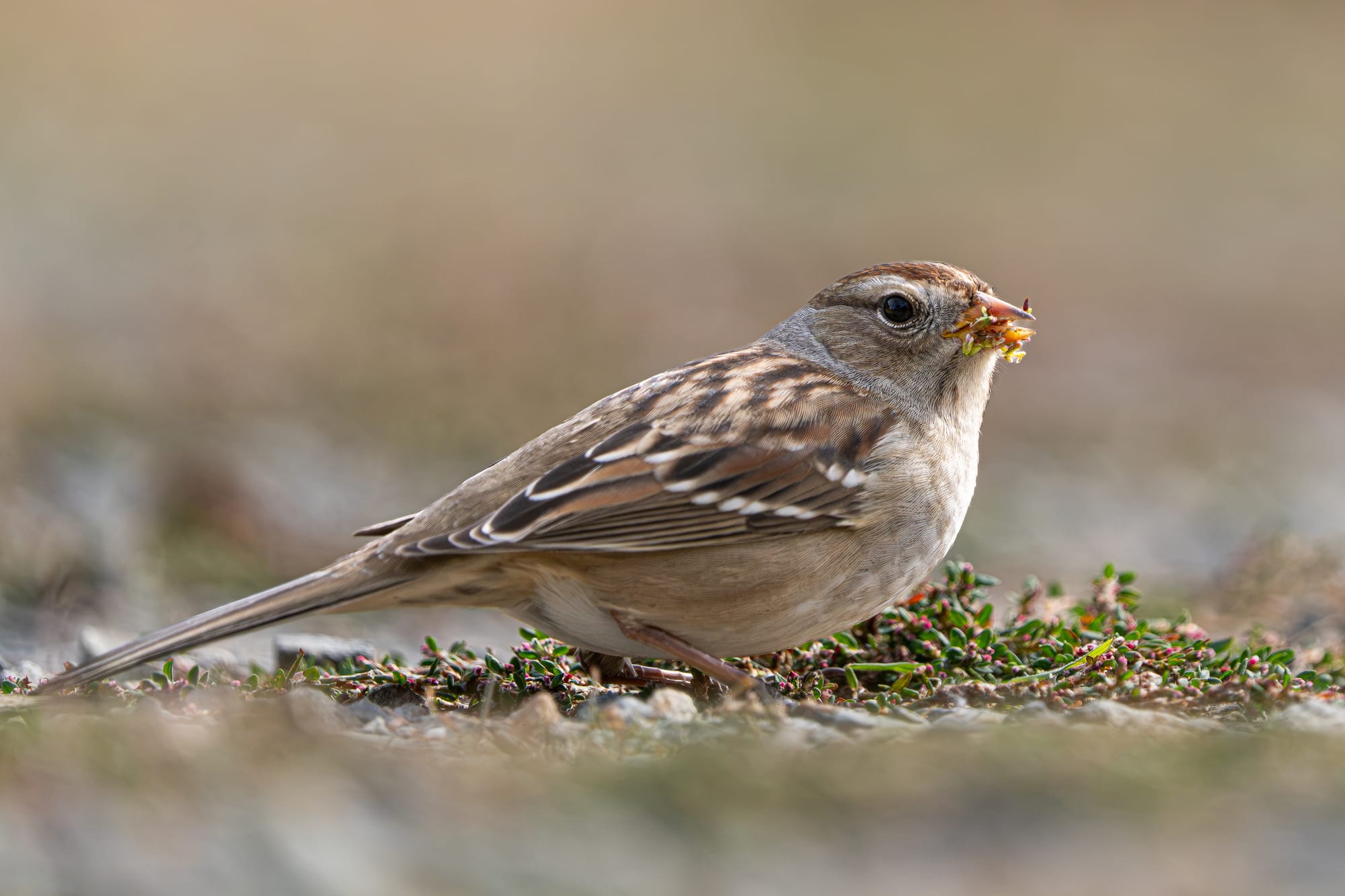
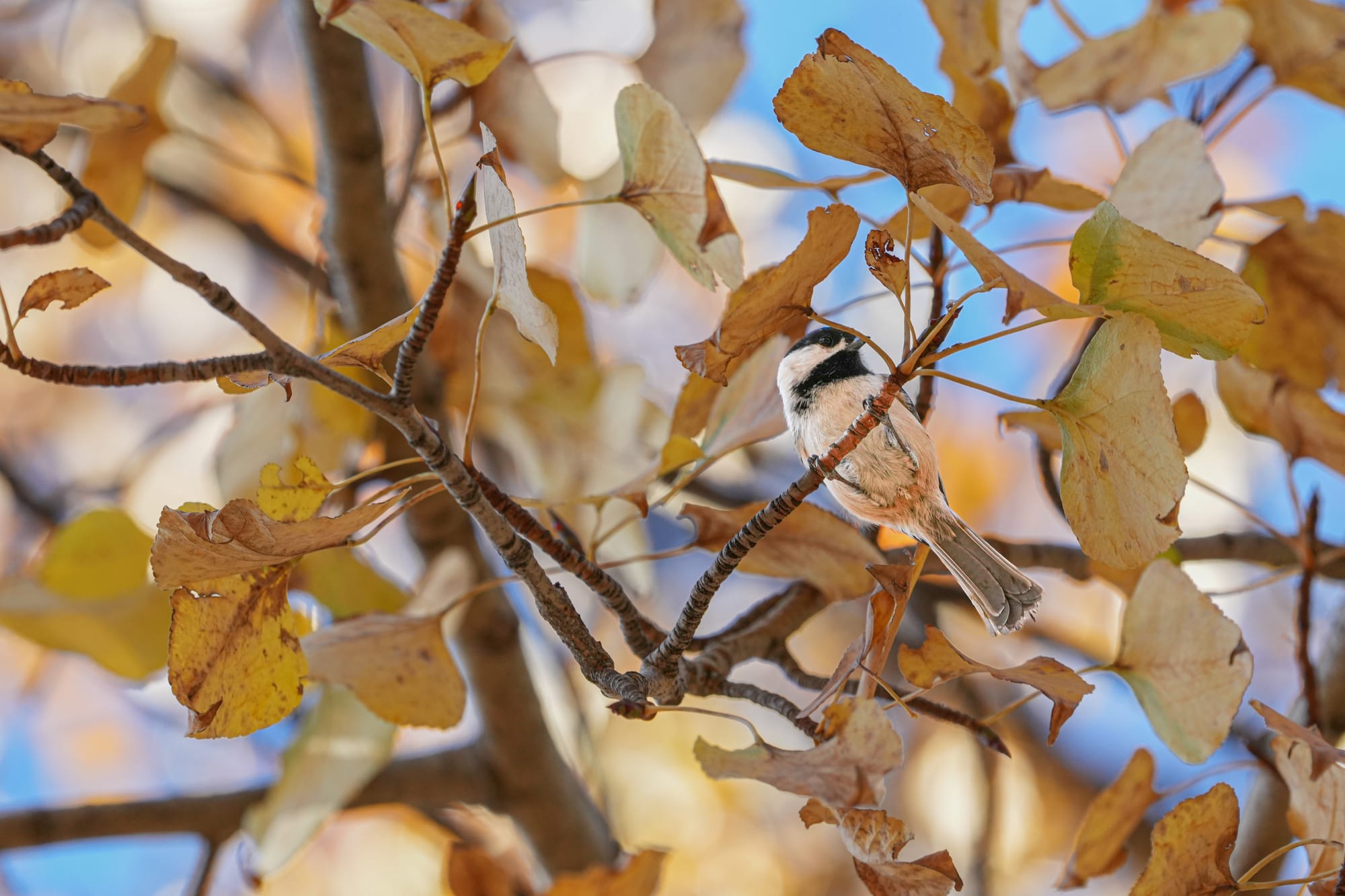
It's also been fun to watch some of our other common birds amid all the fall colors. They make everything feel normal and right where it should be, so I am thankful for their quiet background presence at this time of year.
It's easy to get a little complacent when you see the same birds day after day, but I got a shocking reminder to always pay attention when I found a rusty blackbird along one of my routine walking routes this week! According to a definitive book on the birds of Washington, rusty blackbirds are only found 1-3 times a year in the state so this was an unexpected find.
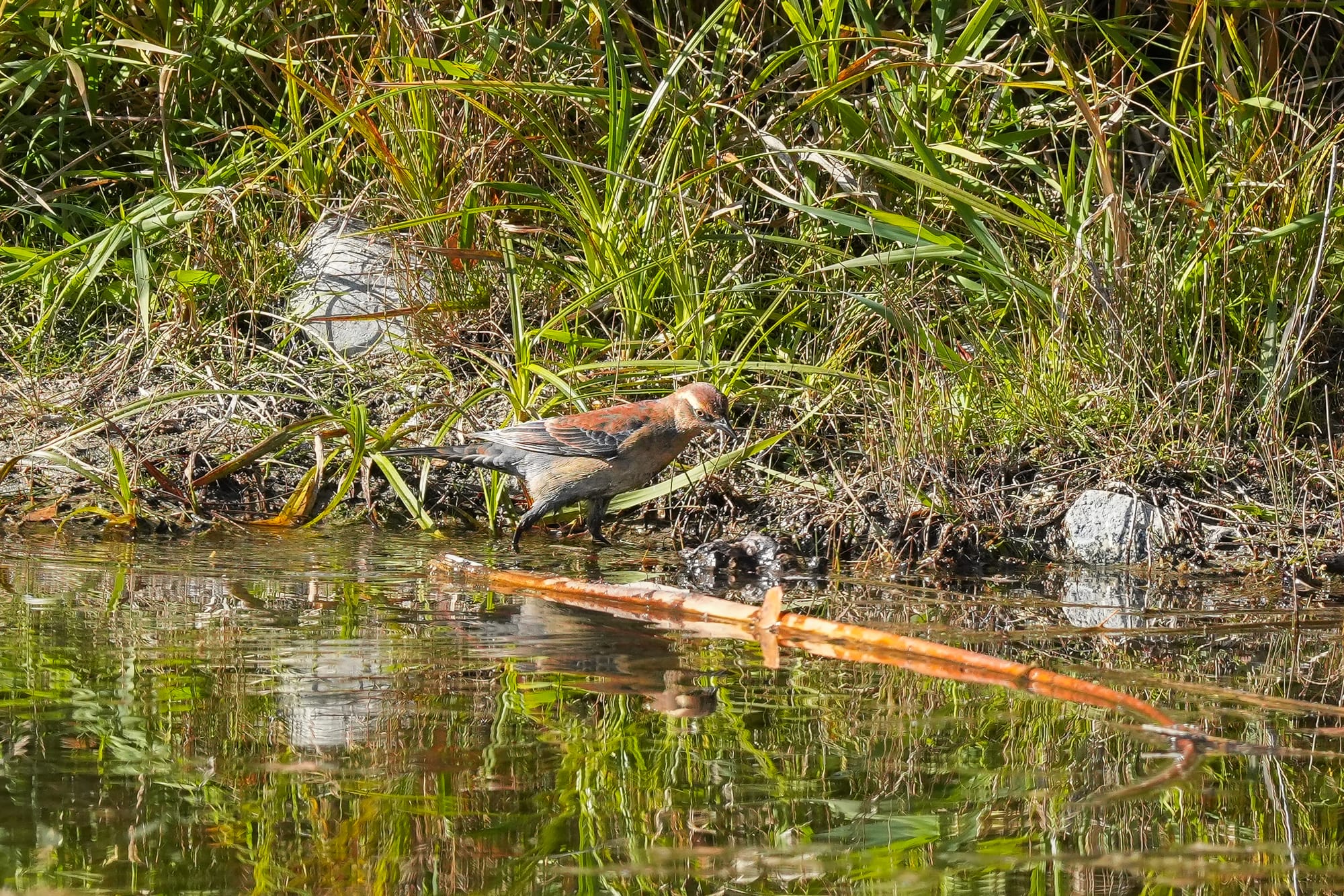
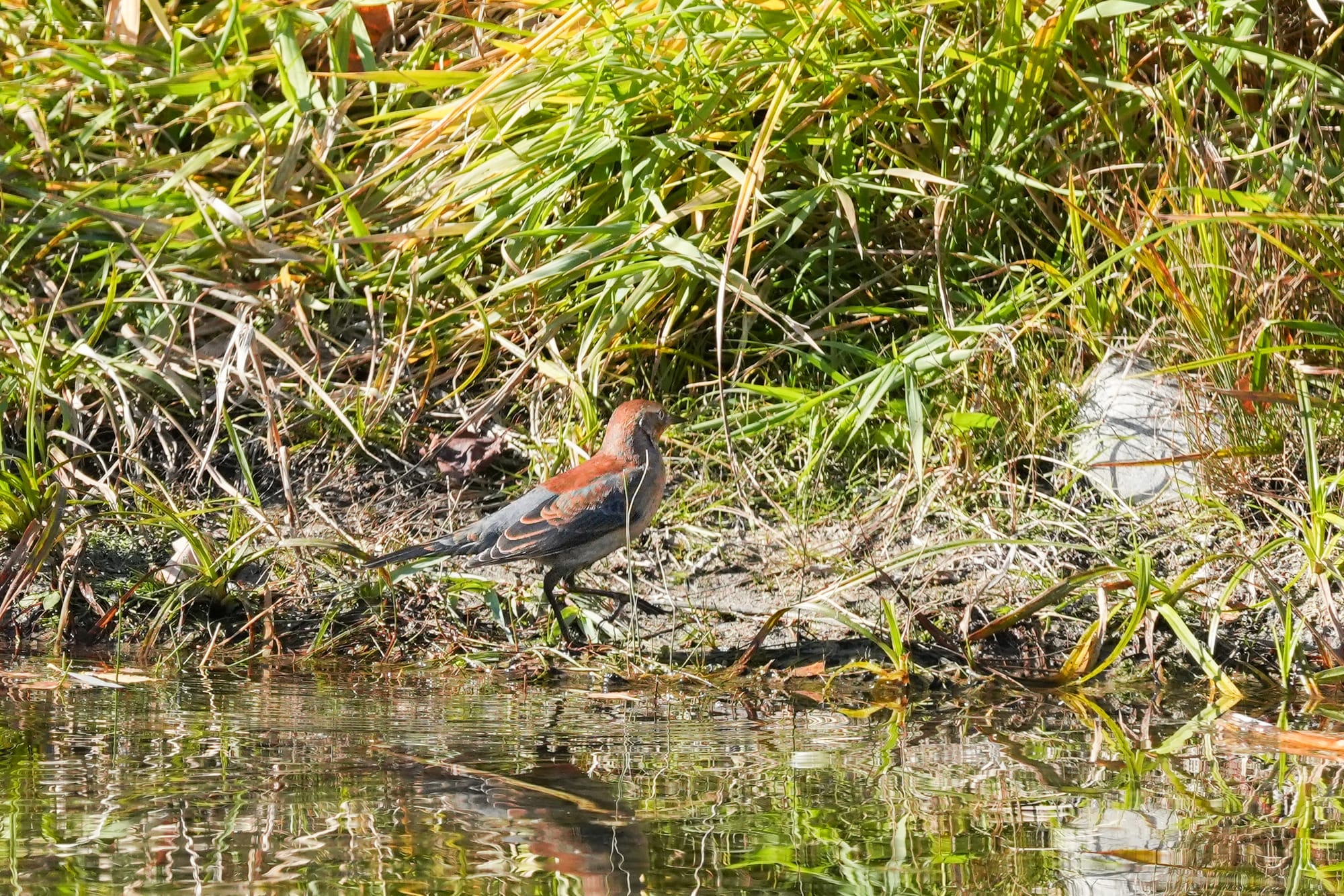
In poor light, the rusty blackbird looks like a red-winged or Brewer's blackbird, but in good light, it's clear that it's a very different bird. Photos by David Lukas
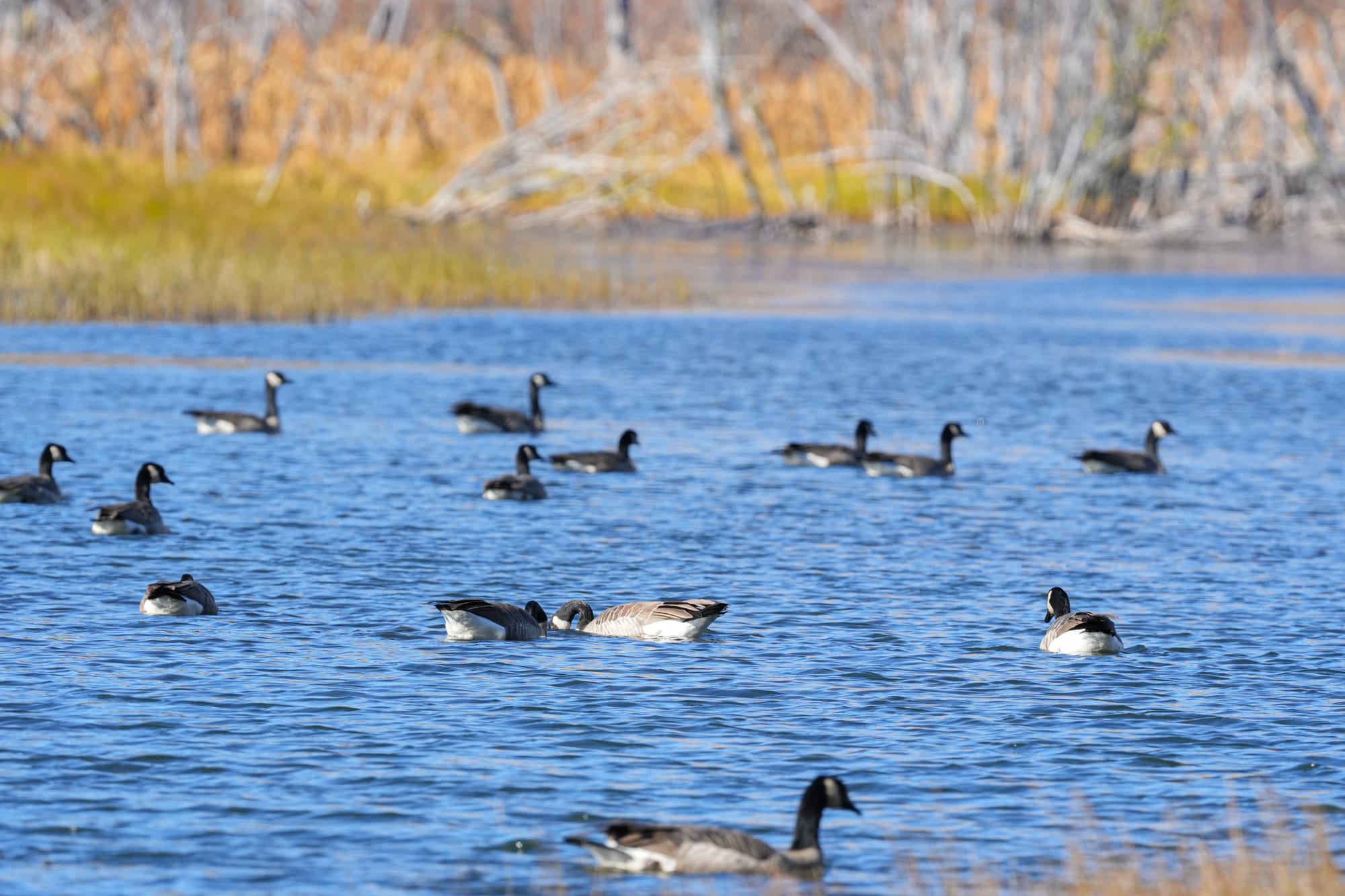
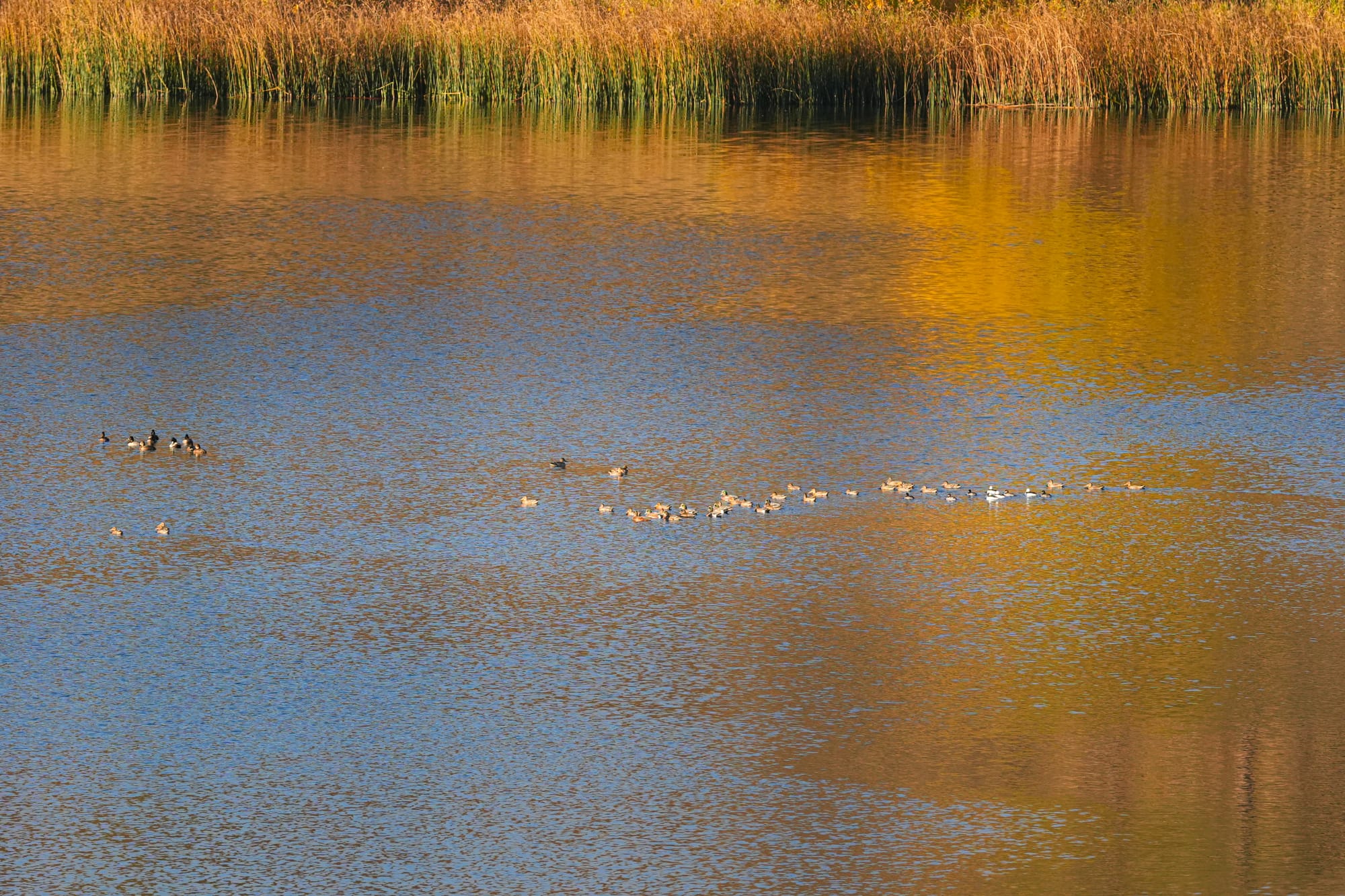
The benefit of paying attention also applies to watching the same spots day after day. The spot that I check multiple times a day is Big Twin Lake, so I immediately noticed when a big group of migrating ducks arrived on October 23. In general, I suspect that ducks are migrating if they stay in a tight nervous group. This suggests that they are not familiar with the site and are ready to flee at the slightest disturbance, while resident ducks get comfortable and aren't as flighty.
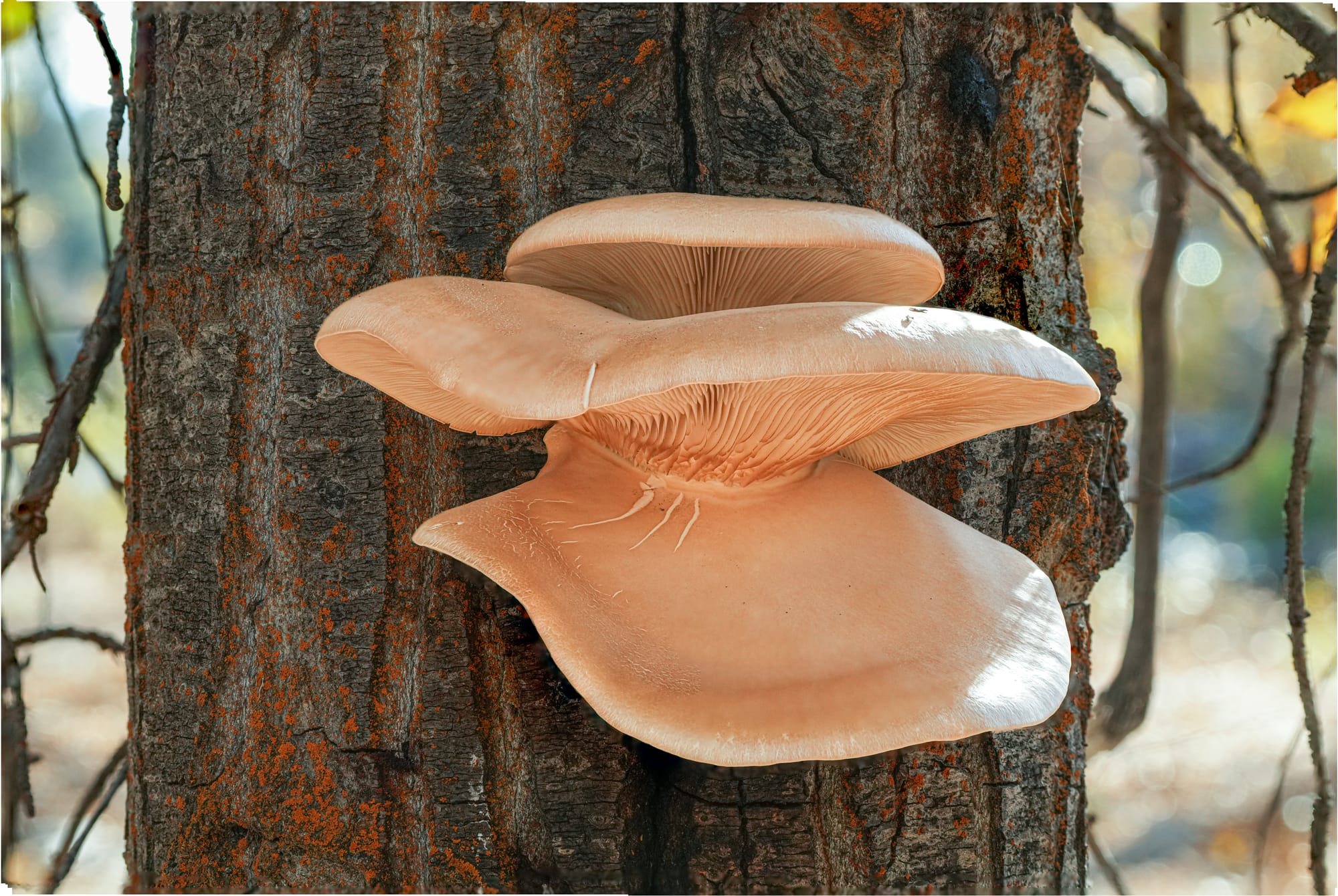
Finally, for the mushroom fans, it's worth noting that a few mushrooms are now sprouting despite the resounding lack of rain. I'm hoping that we'll see even more mushrooms if rain arrives before freezing temperatures and snow!
Observation of the Week: A Tale of Two Larches
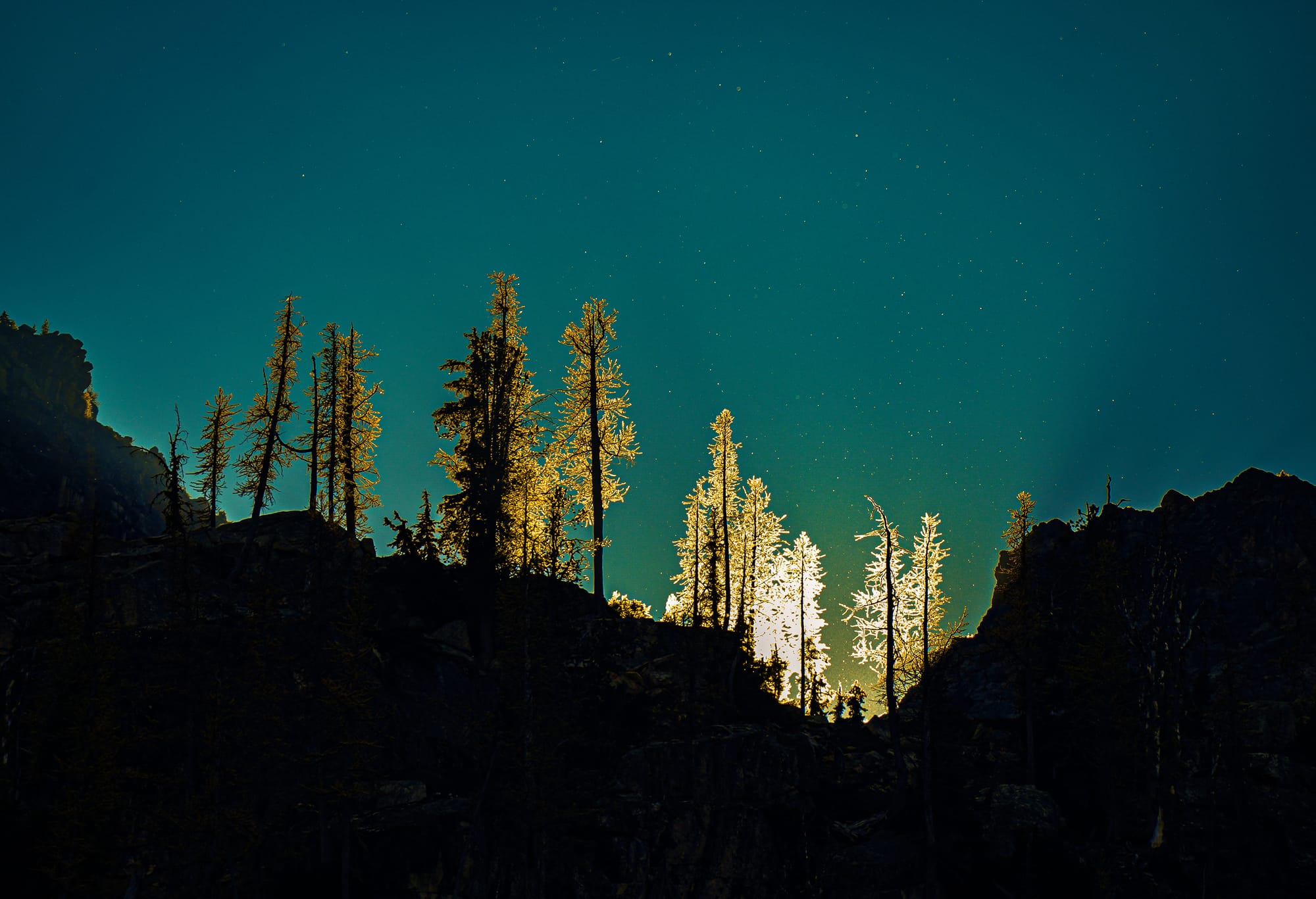
We are fortunate in the Methow Valley that we have two types of larch trees that turn brilliant colors in the fall, with subalpine larches (Larix lyallii) at higher elevations reaching their peak colors about two weeks earlier than lower-elevation western larches (Larix occidentalis).
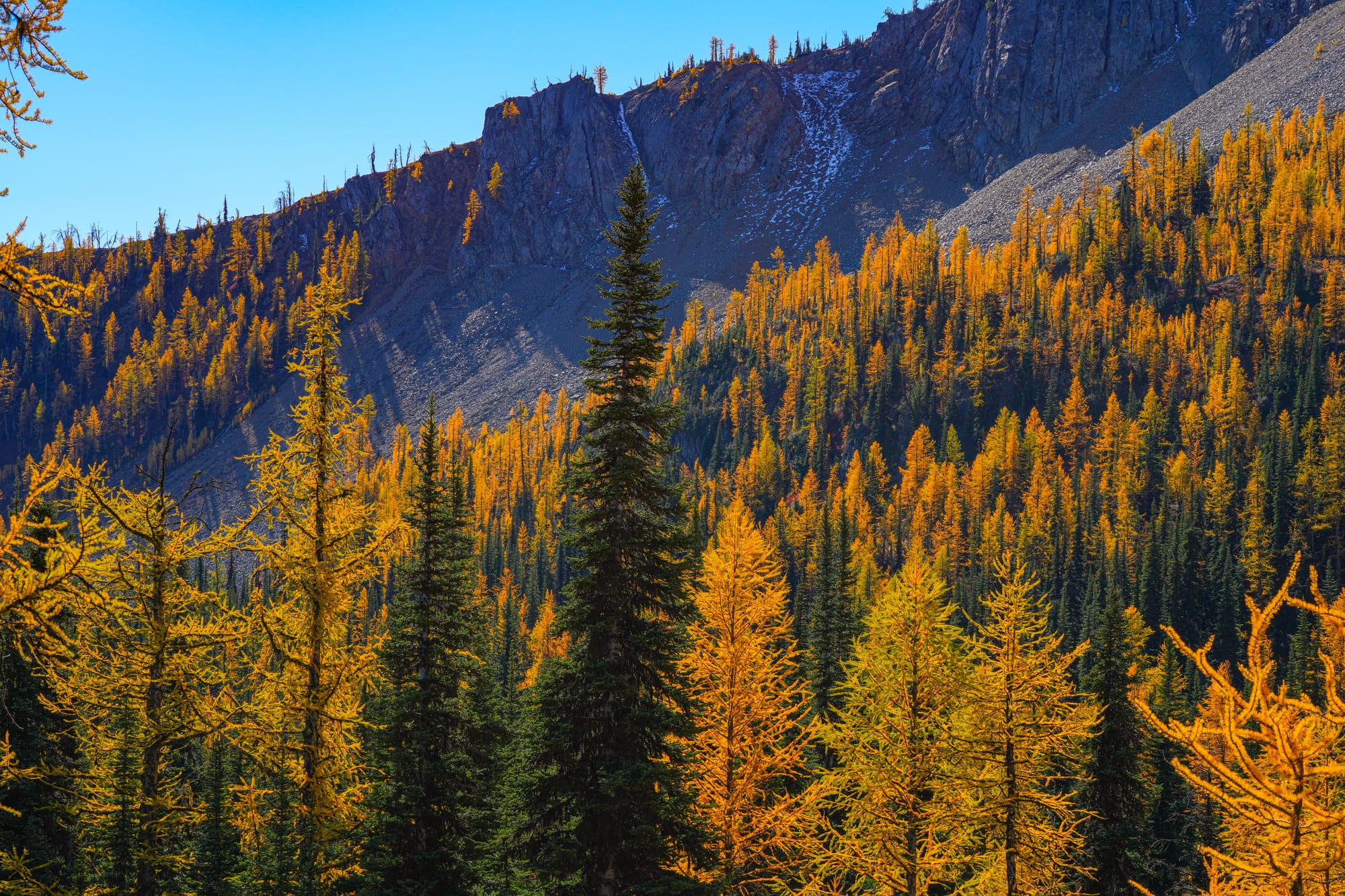
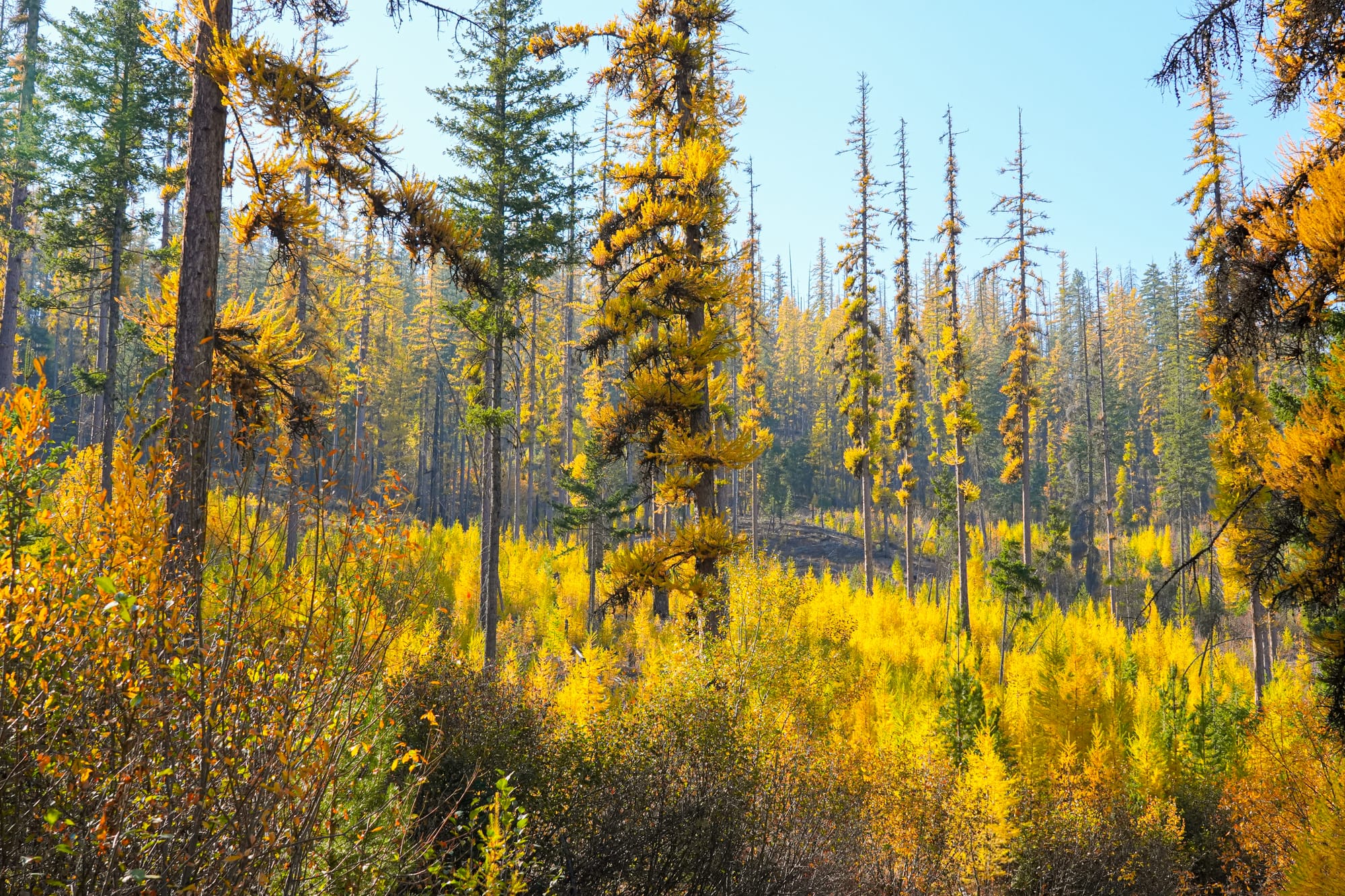
We're even more fortunate because subalpine larches have a very limited distribution that includes portions of the North Cascades and Pasayten Wilderness. And while western larches are widespread in the Northern Rockies, there is one outlying pocket growing around Loup Loup Summit. This puts us in an overlap zone where these two species can be found in close proximity to each other.
In many ways, these two species are nearly identical in appearance, plus they readily hybridize in the few places where their ranges overlap. Both species have sparse canopies and clumps of needles growing from knobs on their branches, and both species have the rare trait of being conifers that drop their needles each fall (a fascinating topic that I explore in my Lukas Guides newsletter).
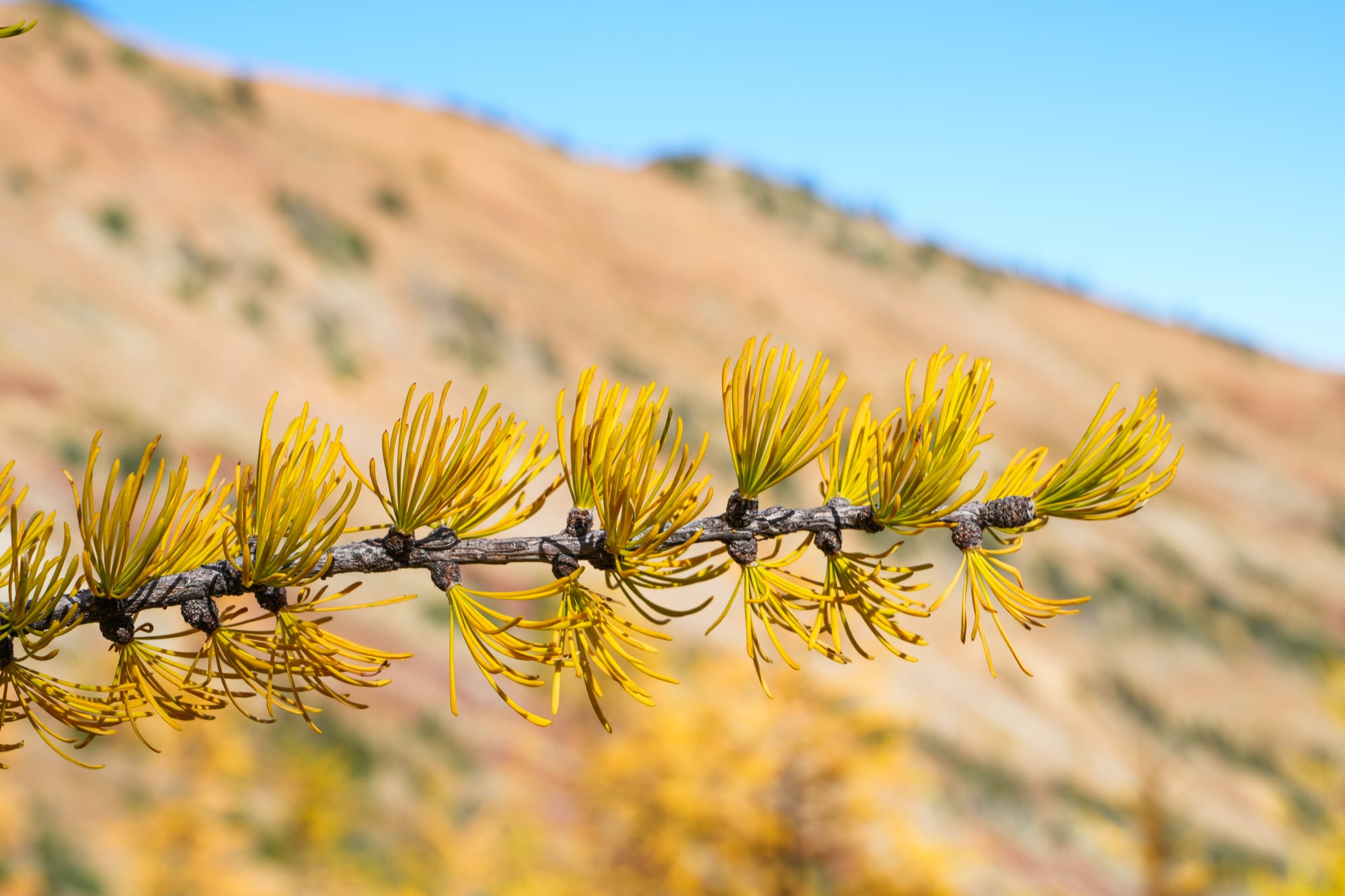
Larches are shade-intolerant and can't easily compete with other trees, so they preferentially grow where other trees aren't growing. In the case of subalpine larches, this means growing on rocky, high elevation sites that other trees avoid, and in the case of western larch this means sprouting quickly after fire or logging.
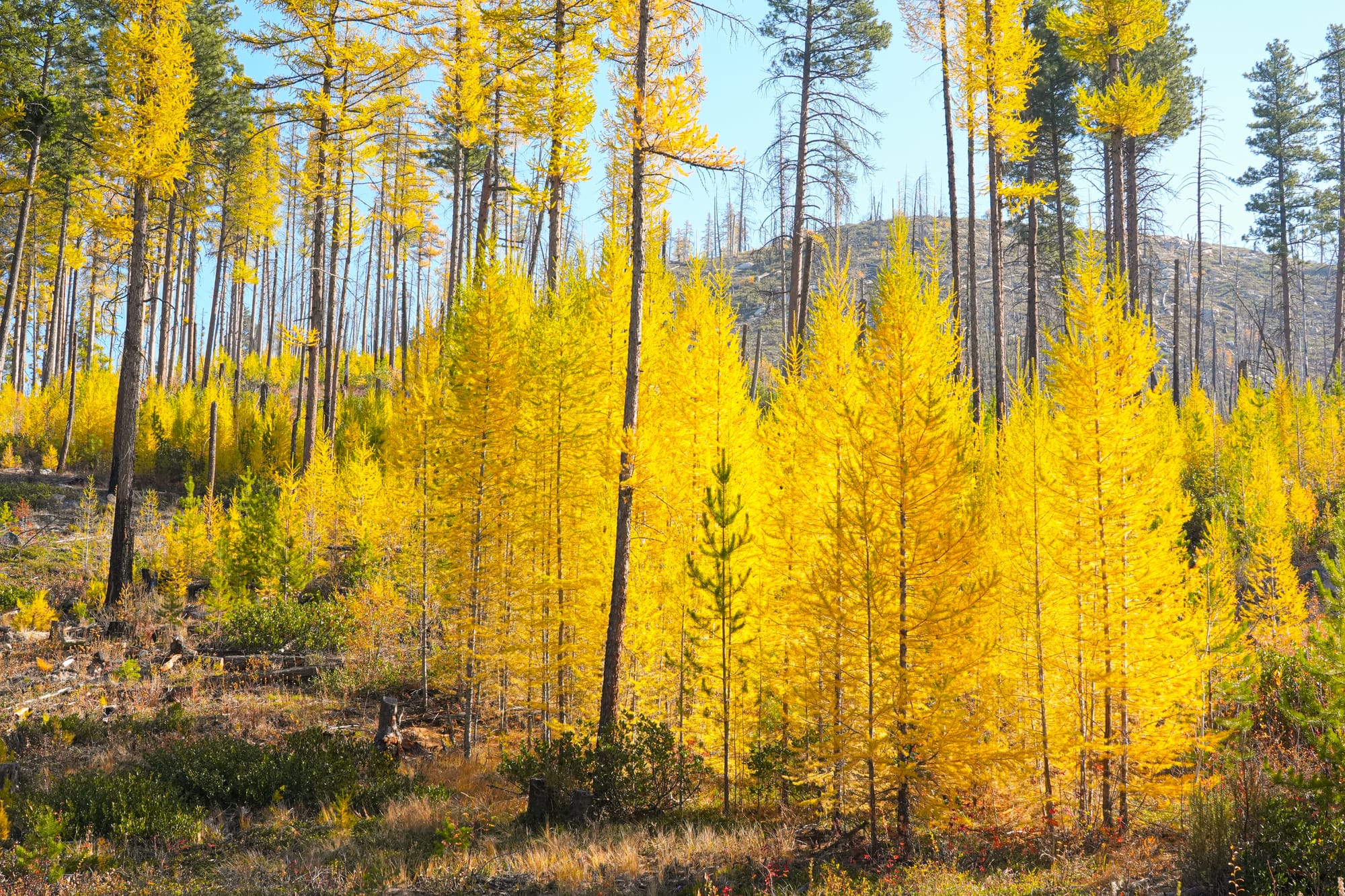
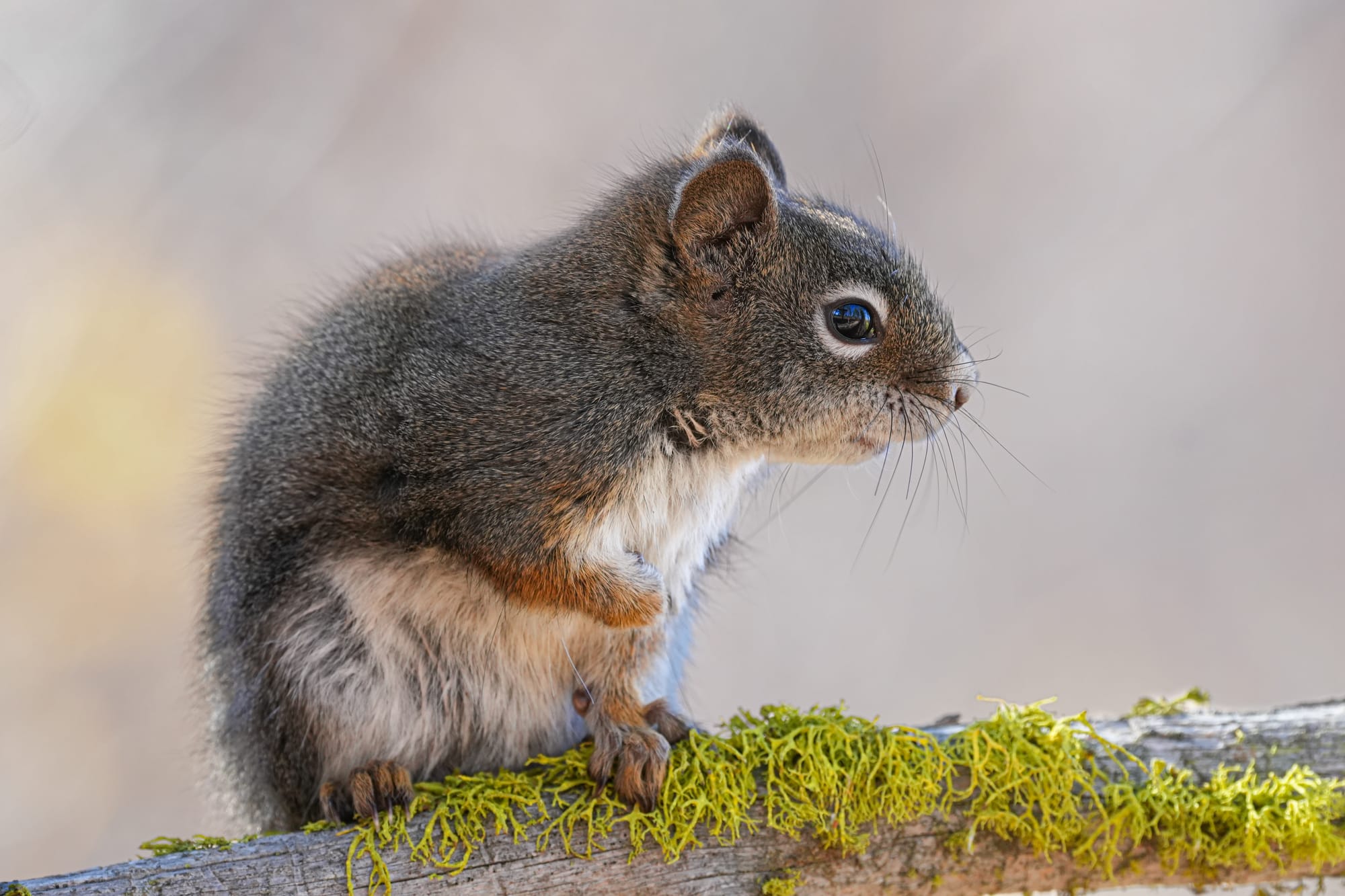
Because western larches are found in mixed-conifer forests at lower elevations, they survive by growing quickly and being the dominant tree for several hundred years. They readily reach four feet in diameter (with the record tree being seven feet in diameter) and live for nearly 1000 years, with many of the oldest trees starting to rot in the center and creating homes for nesting birds, bats, and small mammals.
Perhaps the most important role of western larches is that they will often survive fires that kill other trees, while their saplings fill open spaces left behind, which means they play a key role in helping establish new forests after a fire has come through.
